Discover 15 signs of emotional unavailability in men, understand the psychology behind their behavior, and learn how it affects relationships.
Have you ever been with a man who seems genuinely interested one day but emotionally distant the next? Maybe he texts you regularly, enjoys spending time together, and even says he cares about you. Yet when the relationship starts becoming more serious, he suddenly pulls away, avoids emotional conversations, or keeps you guessing about where you stand. If this sounds familiar, you may be dealing with emotional unavailability in men.
An emotionally unavailable man isn’t always cold or uncaring. In many cases, he simply struggles to express his feelings, build emotional intimacy, or commit to a deeper connection. His behavior can leave you feeling confused, frustrated, and constantly wondering whether he truly loves you or is simply afraid of getting close.
The challenge is that emotional unavailability isn’t always obvious in the beginning. Many emotionally unavailable men appear charming, attentive, and affectionate during the early stages of dating. However, as emotional intimacy grows, they often begin creating distance, sending mixed signals, or avoiding conversations about the future. Understanding these patterns can help you recognize the difference between someone who genuinely needs time and someone who may never be emotionally available.
In this guide, you’ll discover 15 clear signs of emotional unavailability in men, the hidden psychology behind this behavior, common causes, and practical ways to handle the situation without losing yourself in the process. Whether you’re dating someone new or trying to understand your current relationship, this article will help you gain clarity and make healthier relationship decisions with confidence.
What Does Emotional Unavailability in Men Mean?
Emotional unavailability in men refers to a pattern where a man struggles to create or maintain a deep emotional connection in a relationship. While he may genuinely enjoy your company, care about you, or even love you, expressing emotions, building intimacy, and committing on a deeper level often feel uncomfortable or overwhelming. As a result, he may unintentionally keep you at a distance, leaving you confused about his true feelings.
This behavior doesn’t always stem from a lack of interest. Many emotionally unavailable men have experienced childhood trauma, painful breakups, fear of rejection, or years of suppressing their emotions. Instead of processing those experiences, they develop emotional walls as a form of self-protection. Unfortunately, those same walls also prevent healthy relationships from growing.
It’s important to understand that emotional unavailability is different from simply being shy, introverted, or taking time to trust someone. A shy man may slowly open up as the relationship develops, while an emotionally unavailable man often continues avoiding vulnerability, even after months or years together. Recognizing this difference can help you set realistic expectations and protect your emotional well-being.
Why Are Some Men Emotionally Unavailable?
Emotional unavailability rarely appears without a reason. Most men don’t wake up one day and decide to avoid emotional intimacy. Instead, this behavior usually develops over time because of life experiences, personal beliefs, or unresolved emotional wounds.
For some men, childhood plays a significant role. If they grew up in families where emotions were ignored or considered a sign of weakness, they may have learned to suppress their feelings rather than express them. Others become emotionally unavailable after experiencing betrayal, heartbreak, divorce, or toxic relationships that made vulnerability feel unsafe.
Society also influences emotional behavior. Many boys are taught to “man up,” hide their emotions, and solve problems alone. As adults, these lessons can make emotional communication feel unfamiliar or even uncomfortable.
In some cases, emotional unavailability is linked to a fear of commitment or fear of losing independence. The closer a relationship becomes, the more anxious they feel, causing them to pull away instead of moving closer.
While understanding these reasons can create empathy, it’s important to remember that they don’t excuse repeated emotional neglect. Healthy relationships require mutual communication, emotional availability, trust, and a willingness to grow together.
15 Signs of Emotional Unavailability in Men
If you’re constantly questioning where you stand in a relationship, you’re not alone. Emotional unavailability isn’t always obvious at first. In fact, many emotionally unavailable men appear affectionate and interested during the honeymoon phase. The real signs usually emerge when the relationship begins to deepen emotionally. Below are the most common signs that can help you identify whether the man you’re dating is emotionally unavailable or simply taking things slowly.
1. He Avoids Deep Conversations
One of the clearest signs of emotional unavailability in men is avoiding meaningful conversations. He may happily talk about work, sports, travel, or his favorite TV shows for hours. However, when the discussion shifts toward feelings, vulnerability, past experiences, or the future of your relationship, he quickly changes the subject or gives vague answers.
At first, you might assume he’s simply private or needs more time to trust you. But if months pass and he still refuses to open up emotionally, it becomes a pattern rather than a personality trait. Healthy relationships grow through honest communication and emotional intimacy, not surface-level conversations.
If you often feel like you know his daily routine but almost nothing about his fears, dreams, insecurities, or emotions, he may be protecting himself by keeping you at an emotional distance.
2. He Struggles to Express His Feelings
An emotionally unavailable man often finds it difficult to communicate what he’s feeling. Even if he genuinely cares about you, saying words like “I love you,” “I miss you,” or “I’m afraid of losing you” may feel uncomfortable.
Instead of expressing emotions verbally, he may rely on practical actions or avoid discussing feelings altogether. While actions certainly matter, emotional communication is equally important in building trust and intimacy.
This doesn’t necessarily mean he doesn’t have emotions. More often, he has learned to suppress them or fears that expressing vulnerability could lead to rejection or disappointment.
If every conversation about emotions feels one-sided, or if he becomes defensive whenever you ask how he feels, emotional unavailability may be preventing the relationship from growing deeper.
3. He Keeps You at an Emotional Distance
You spend time together, laugh together, and enjoy each other’s company, yet something always feels incomplete. Even after weeks or months of dating, it seems like there’s an invisible wall between you. He shares very little about his personal struggles, childhood experiences, fears, or long-term dreams. While he may know everything about your life, you often realize you know very little about what truly goes on in his mind.
Emotionally unavailable men usually allow physical closeness long before they allow emotional closeness. They may enjoy dates, intimacy, and companionship but hesitate to let someone see their vulnerable side. As a result, the relationship stays on the surface instead of growing into a deeper emotional connection.
Over time, this emotional distance can make you feel lonely, even when you’re together. A healthy relationship should make you feel emotionally safe, heard, and connected—not like you’re constantly trying to break through an invisible barrier.
4. He Sends Mixed Signals
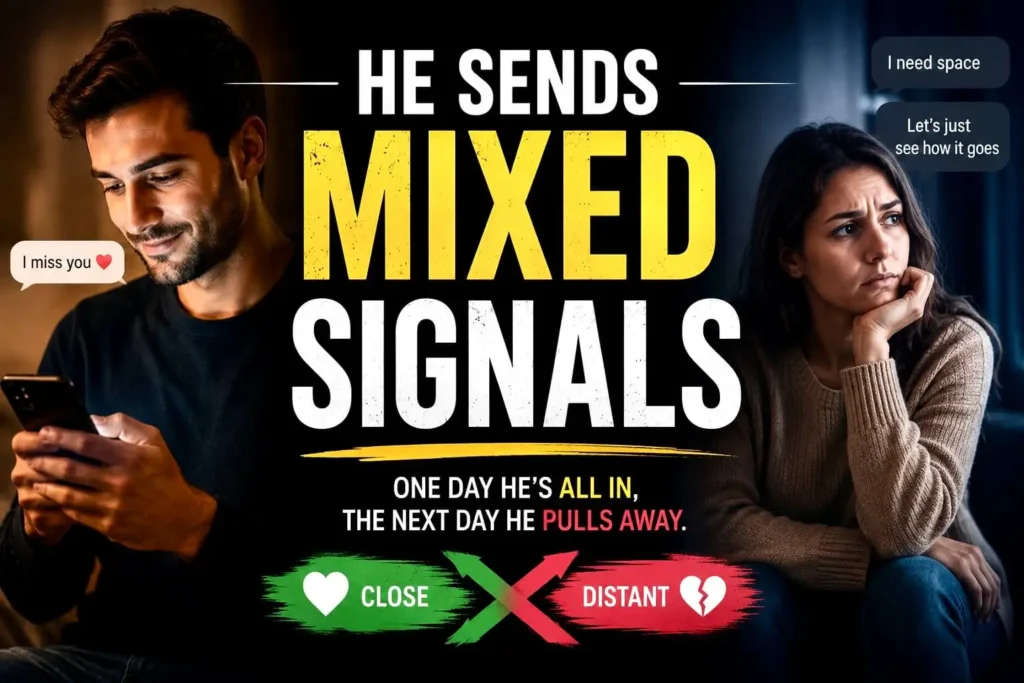
Few relationship behaviors are as confusing as inconsistent communication. One week, he texts you constantly, plans dates, and makes you feel like you’re the most important person in his life. The following week, he becomes distant, replies with one-word messages, or disappears without any clear explanation.
These mixed signals often create emotional confusion. You start wondering whether you said something wrong or whether his feelings have changed overnight. In reality, this inconsistency often reflects his internal struggle rather than anything you did.
An emotionally unavailable man may genuinely enjoy closeness, but as soon as the relationship starts becoming emotionally serious, fear takes over. Instead of communicating openly, he creates distance to protect himself.
If you constantly feel like you’re riding an emotional roller coaster—never knowing which version of him you’ll get next—it’s a strong sign that emotional availability may be lacking.
5. He Fears Commitment
Commitment isn’t just about marriage or moving in together. It also means being emotionally invested, making future plans, and building a secure relationship together. An emotionally unavailable man often avoids these conversations because they make him feel pressured or vulnerable.
He may say things like, “Let’s not put labels on this,” “I’m just enjoying the moment,” or “I’m not ready for anything serious right now.” While everyone moves at a different pace, months—or even years—of avoiding commitment usually indicate something deeper.
His fear isn’t always about you. Sometimes it’s rooted in past heartbreak, fear of failure, or losing his independence. However, if he consistently refuses to move the relationship forward despite your patience and understanding, it’s important to ask yourself whether he’s truly capable of giving you the relationship you deserve.
A healthy partner may need time, but they won’t keep you waiting indefinitely without clarity or direction.
6. He Prioritizes Everything Else Over the Relationship
Everyone has responsibilities, whether it’s work, family, personal goals, or hobbies. However, when a man is emotionally unavailable, the relationship often stays at the bottom of his priority list. He may repeatedly cancel plans, respond to messages hours or even days later, or always seem “too busy” whenever emotional connection requires effort.
While it’s perfectly normal to have a demanding schedule, consistently making you feel like an afterthought is different. An emotionally available man will still find ways to stay connected, communicate openly, and make time for the relationship despite life’s challenges.
If you’re always adjusting your schedule while he rarely makes compromises, it may indicate that he’s keeping emotional distance by investing his energy elsewhere. A healthy relationship should feel like a shared priority, not something that only receives attention when it’s convenient.
7. He Rarely Opens Up About His Life
Trust is built through vulnerability, yet emotionally unavailable men often reveal very little about themselves. Even after months of dating, you may realize that you’ve never heard him talk about his deepest fears, biggest regrets, childhood memories, or personal insecurities.
Instead, conversations remain focused on safe topics that don’t require emotional exposure. Whenever you ask personal questions, he may give short answers, joke about the topic, or redirect the conversation back to you.
This emotional secrecy doesn’t necessarily mean he’s hiding something. Often, it reflects years of believing that sharing emotions makes him weak or vulnerable. Unfortunately, without openness, it’s difficult for genuine intimacy to develop.
A strong relationship isn’t built solely on spending time together—it’s built on knowing and understanding each other’s emotional world.
8. He Shuts Down During Conflict
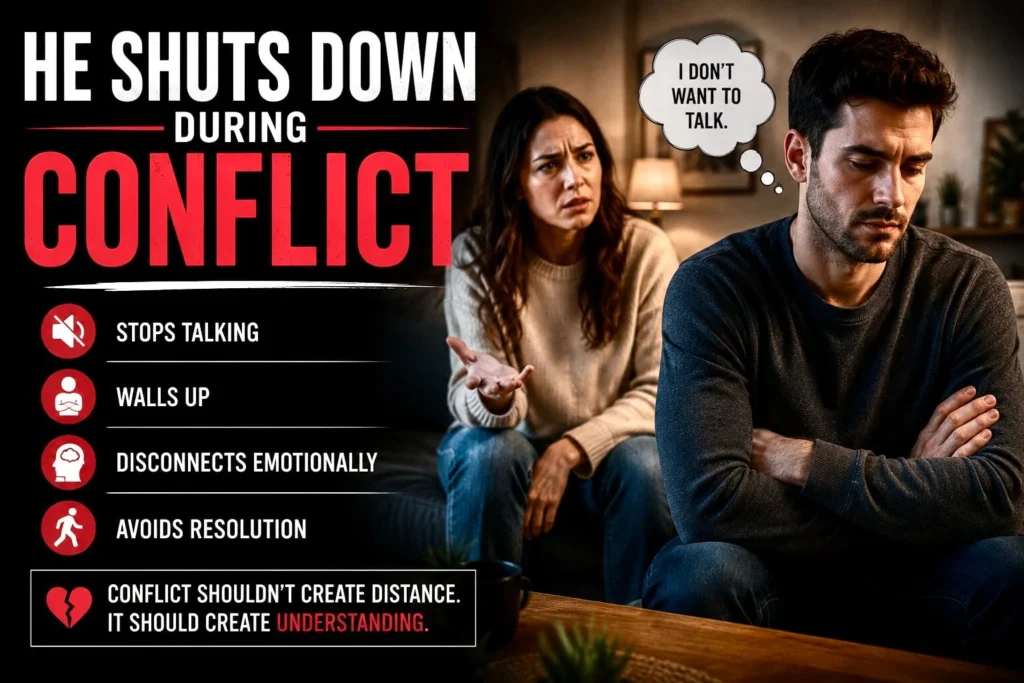
Disagreements are a normal part of every relationship. The difference lies in how couples handle them. An emotionally unavailable man often withdraws instead of communicating when conflict arises.
Rather than discussing the issue calmly, he may become silent, leave the conversation, ignore your messages, or pretend nothing happened. This behavior, often called stonewalling, prevents problems from being resolved and leaves both partners feeling unheard.
Conflict requires vulnerability because it involves admitting mistakes, expressing feelings, and finding solutions together. Someone who struggles with emotional intimacy may see conflict as overwhelming and choose avoidance instead.
If every disagreement ends with emotional distance instead of healthy communication, unresolved issues will continue building over time, making the relationship increasingly frustrating and emotionally exhausting.
9. He Avoids Talking About the Future
One of the strongest indicators of emotional availability is a willingness to include you in future plans. An emotionally unavailable man, however, often avoids these conversations altogether.
Whenever you mention future vacations, meeting each other’s families, moving in together, or long-term goals, he may change the subject or respond with vague statements like, “Let’s just see what happens,” or “Why plan so far ahead?”
While it’s understandable not to have every detail figured out, someone who genuinely sees a future with you usually enjoys discussing it. They don’t need to promise marriage immediately, but they should be comfortable imagining a future together.
If months pass and he still refuses to talk about where the relationship is heading, it may be a sign that he’s emotionally protecting himself—or that he simply isn’t ready to invest in a deeper commitment.
10. He Gives Minimal Emotional Affection
Affection isn’t only about holding hands or saying “I love you.” It’s also about making your partner feel emotionally valued, appreciated, and secure. An emotionally unavailable man may occasionally show physical affection, but he often struggles to provide the emotional reassurance that keeps a relationship healthy.
Compliments are rare, heartfelt conversations are limited, and words of encouragement may be almost nonexistent. When you’re feeling stressed or vulnerable, instead of offering comfort, he may respond with indifference or quickly change the subject. Over time, this lack of emotional warmth can leave you feeling emotionally neglected, even if the relationship appears fine from the outside.
Everyone expresses love differently, but healthy relationships include consistent emotional support. If you’re constantly craving reassurance, validation, or genuine emotional closeness, it may be because your partner isn’t emotionally available enough to meet those needs.
11. He Disappears When Things Get Serious
One of the most frustrating signs of emotional unavailability is disappearing whenever the relationship reaches a deeper level. Everything may seem perfect until conversations about exclusivity, commitment, meeting family, or long-term plans begin. Suddenly, his texts become less frequent, he starts canceling plans, or he creates emotional distance without explaining why.
This behavior is often driven by fear rather than a lack of attraction. Emotional intimacy makes him feel exposed, so pulling away becomes his way of regaining a sense of control. Unfortunately, this creates a painful cycle where you feel closer one moment and completely disconnected the next.
If someone repeatedly withdraws every time the relationship becomes more meaningful, it’s a strong sign that emotional intimacy feels threatening to them. A healthy partner may need time to adjust, but they won’t repeatedly disappear whenever things become emotionally serious.
12. He Keeps the Relationship Casual

An emotionally unavailable man often prefers relationships that remain undefined or emotionally low-risk. He may enjoy dating, spending weekends together, or being physically intimate, but he avoids conversations about commitment, exclusivity, or building a shared future.
You might hear phrases like “Let’s not complicate things,” “I’m just going with the flow,” or “Why do we need labels?” While these statements can sometimes reflect a genuine desire to take things slowly, they become concerning when months pass without any emotional progress.
Healthy relationships naturally evolve through trust, communication, and shared goals. If he consistently resists every opportunity to deepen the connection, it’s worth asking whether he’s protecting his independence—or simply protecting himself from emotional vulnerability.
Remaining in a permanently casual relationship often benefits the emotionally unavailable partner while leaving the other person feeling uncertain and emotionally unfulfilled.
13. He Has Difficulty Trusting Others
Trust is the foundation of every healthy relationship, but emotionally unavailable men often struggle to fully trust the people closest to them. Even if you’ve never given him a reason to doubt you, he may keep his guard up, question your intentions, or avoid becoming emotionally dependent on anyone.
This lack of trust is often rooted in past experiences rather than the present relationship. A painful breakup, childhood neglect, betrayal, or repeated disappointment can make someone believe that emotional closeness eventually leads to pain. To protect themselves, they build emotional walls that prevent genuine intimacy.
As a result, you may feel like you’re constantly trying to prove your loyalty without ever earning complete trust. While patience and understanding can help, trust ultimately requires a personal willingness to heal. A relationship cannot thrive if one partner is always expecting to be hurt.
14. He Is Uncomfortable With Vulnerability
Vulnerability is one of the strongest indicators of emotional intimacy. It means sharing fears, insecurities, dreams, failures, and emotions without worrying about being judged. Unfortunately, emotionally unavailable men often see vulnerability as a risk rather than a strength.
Whenever conversations become emotional, he may laugh them off, change the topic, or respond with logic instead of empathy. He rarely admits when he’s scared, hurt, or overwhelmed because exposing those emotions makes him feel uncomfortable.
This doesn’t necessarily mean he lacks feelings. More often, he has spent years believing that showing emotion makes him weak. Instead of expressing what he’s experiencing internally, he hides behind confidence, humor, or emotional silence.
Healthy relationships require both partners to feel emotionally safe enough to be themselves. If vulnerability never develops, true emotional intimacy remains out of reach.
15. You Feel Lonely Even When You’re Together
Perhaps the biggest sign of emotional unavailability isn’t his behavior—it’s how the relationship makes you feel.
Despite spending time together, going on dates, or talking regularly, you may still experience a deep sense of loneliness. You crave emotional connection, meaningful conversations, and reassurance, but something always seems missing. Instead of feeling secure, you often feel confused, emotionally drained, or uncertain about where you stand.
Healthy relationships provide emotional safety, mutual support, and a sense of partnership. If you constantly feel like you’re carrying the emotional weight alone, it’s worth asking whether your needs are truly being met.
Your feelings matter just as much as his. Love shouldn’t leave you feeling isolated or emotionally starved. If loneliness becomes the defining emotion in your relationship, it may be time to evaluate whether you’re investing in someone who is genuinely capable of giving you the emotional connection you deserve.
The Hidden Psychology Behind Emotional Unavailability
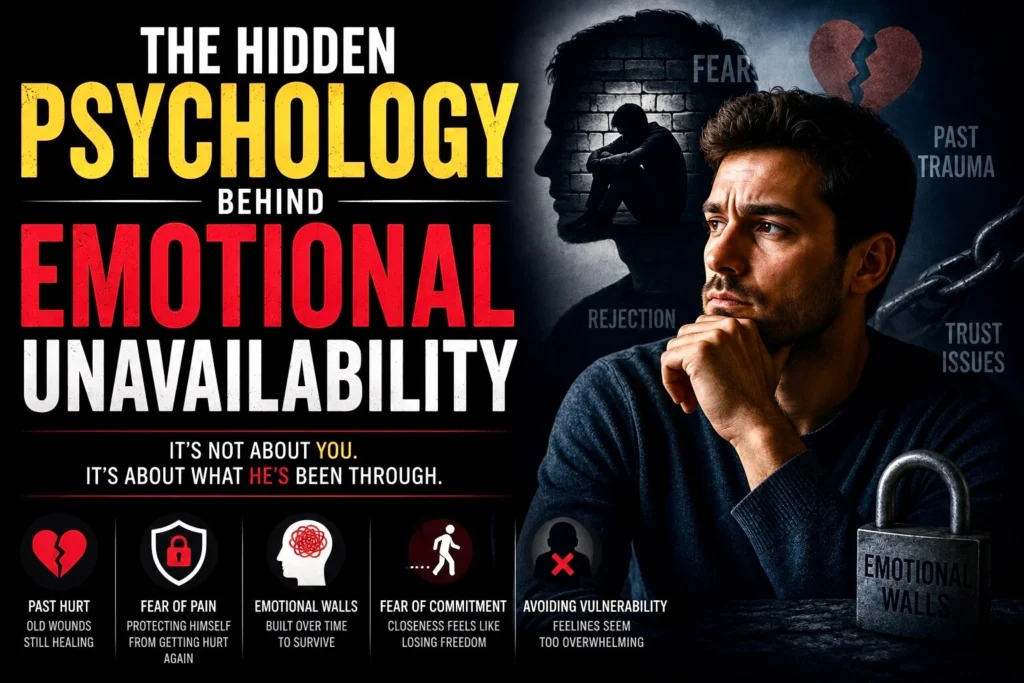
At first glance, an emotionally unavailable man may seem cold, distant, or simply uninterested. However, the psychology behind emotional unavailability is often far more complex. In many cases, this behavior isn’t driven by a lack of feelings—it’s driven by a fear of emotional pain.
Many emotionally unavailable men learned early in life that expressing emotions was unsafe or unacceptable. They may have grown up in households where vulnerability was ignored, criticized, or seen as weakness. Others carry emotional wounds from toxic relationships, betrayal, abandonment, or painful breakups that taught them to protect themselves by avoiding emotional intimacy.
When a relationship starts becoming serious, these unresolved fears can become activated. Instead of moving closer, they instinctively pull away because closeness feels risky. This reaction isn’t always conscious; it’s often a deeply ingrained defense mechanism designed to prevent future heartbreak.
Understanding this psychology can help you approach the situation with empathy. However, empathy should never come at the expense of your own emotional well-being. While you can support someone who is willing to grow, you cannot heal emotional wounds they refuse to acknowledge. Lasting change only happens when a person recognizes their patterns, takes responsibility for them, and actively works toward becoming emotionally available.
Final Thoughts

Recognizing emotional unavailability in men is the first step toward building healthier and more fulfilling relationships. While understanding the reasons behind a man’s emotional distance can help you approach the situation with empathy, it’s important to remember that empathy should never come at the cost of your own emotional well-being.
A loving relationship should make you feel secure, valued, and emotionally connected—not constantly confused or questioning where you stand. If a man consistently avoids vulnerability, refuses to communicate, or keeps you emotionally at arm’s length despite your patience and efforts, it’s worth asking whether the relationship is truly meeting your needs.
The good news is that emotionally unavailable men can change—but only when they recognize the problem and genuinely choose to work on it. No amount of love, sacrifice, or waiting can force someone to become emotionally available before they’re ready.
If you’re trying to better understand male psychology, emotional commitment, and what truly inspires a man to invest deeply in a relationship, you may find His Secret Obsession worth exploring. It explains how emotional connection, communication, and a man’s hidden relationship triggers can influence long-term commitment. Many readers have found it helpful for understanding relationship dynamics and building stronger emotional bonds.
Remember: You deserve a relationship where love is shown through consistency, trust, honesty, and emotional availability. Never settle for breadcrumbs when you’re worthy of genuine commitment and lasting emotional intimacy.
Frequently Asked Questions
You might also find these guides helpful:
- How a Guarded Man Tests You: 15 Psychology Signs
- What Makes a Man Feel Safe With a Woman? 13 Psychology Tips
- How to Make Him Feel Emotionally Safe Around You
- 15 Signs He Wants a Serious Relationship With You
- Why Men Lose Interest in Relationships And How to Prevent It
- Why Do Average Girls Make Everyone Obsessed? 13 Psychology