Have you ever looked at the man you love and quietly wondered, “What happened to us?” Not long ago, he couldn’t wait to call you after work.
Your conversations stretched late into the night, his messages arrived within minutes, and every meeting felt exciting. He seemed genuinely curious about your thoughts, your dreams, and even the smallest details of your day. Then, almost without warning, something changed. The calls became shorter, the texts less frequent, and the excitement that once felt effortless slowly faded into silence. It’s one of the most painful experiences in a relationship because the change rarely happens all at once. Instead, it creeps in so gradually that you often don’t notice it until you’re lying awake at night, replaying every conversation and wondering whether you did something wrong.
If you’ve ever been in that position, you’re far from alone. Thousands of women search every month for answers to questions like, “Why do men lose interest?” or “Can a man fall back in love after pulling away?” The internet is filled with quick fixes and manipulative dating tricks that promise to make any man obsessed with you in a matter of days. While those headlines may sound tempting, real relationships are much more complicated than a list of text messages or psychological games. Attraction isn’t a switch that suddenly turns off. More often, it changes because emotional needs slowly stop being met, communication becomes weaker, or both partners unknowingly fall into patterns that create distance instead of closeness.
The encouraging news is that understanding why men lose interest in relationships gives you the power to respond differently. Instead of blaming yourself or chasing someone who seems emotionally distant, you can recognize the deeper psychological reasons behind the change. In many cases, the relationship isn’t broken beyond repair—it simply needs more emotional awareness, healthier communication, and a willingness from both partners to reconnect. This article explores the most common reasons men gradually lose emotional attraction and, more importantly, what you can do to prevent it while building a relationship that continues to grow stronger over time.
1. The Relationship Stops Feeling Like an Adventure
When two people first fall in love, everything feels new. Every conversation reveals another layer of the other person’s personality, every date creates a fresh memory, and even ordinary moments feel exciting because they’re shared with someone special. Psychologists often describe this early stage as a period of novelty, during which the brain releases chemicals associated with excitement, anticipation, and emotional bonding. However, as months pass and life settles into routines, that natural excitement begins to fade. This doesn’t necessarily mean love has disappeared—it simply means the relationship has entered a different stage. Unfortunately, many couples mistake the loss of novelty for the loss of attraction.
Imagine spending every weekend doing exactly the same thing, having the same conversations, visiting the same places, and following the same schedule month after month. While routine creates comfort and stability, too much predictability can quietly reduce emotional excitement. A man may not consciously think, “I’m losing interest,” but he may begin feeling that the relationship no longer inspires the curiosity and energy it once did. This emotional shift often happens so gradually that neither partner realizes it’s occurring until the distance has already grown.
The healthiest couples understand that lasting love isn’t about constantly chasing the excitement of the honeymoon phase. Instead, they intentionally create new experiences together. That could mean taking a spontaneous road trip, learning a new hobby as a couple, trying unfamiliar restaurants, planning weekend adventures, or simply breaking away from repetitive routines. Novel experiences activate the brain’s reward system and remind both partners that the relationship is still evolving. Love doesn’t stay exciting on its own—it grows when two people continue giving each other reasons to look forward to tomorrow.
2. He No Longer Feels Emotionally Appreciated
One of the biggest misconceptions about men is that they only care about respect or physical attraction. While those things certainly matter, emotional appreciation is just as important. Every person wants to feel that their efforts are noticed and valued, especially by someone they deeply care about. Unfortunately, many relationships slowly become dominated by responsibilities, stress, and problem-solving. Conversations revolve around bills, work pressure, family obligations, or daily frustrations, leaving very little room for genuine appreciation. Over time, a man may begin feeling that no matter how much he contributes, it simply goes unnoticed.
This emotional experience isn’t always dramatic. It often develops through countless small moments. Perhaps he fixes something around the house without hearing a simple thank you. Maybe he rearranges his schedule to spend time together, but the focus quickly shifts to what he didn’t do instead. Gradually, his mind begins associating the relationship with criticism rather than encouragement. While he may never openly admit it, constantly feeling unappreciated can slowly reduce emotional investment because people naturally move toward environments where they feel valued and away from places where they feel invisible.
Appreciation doesn’t require grand romantic speeches or expensive surprises. Sometimes it’s as simple as sincerely acknowledging the little things your partner does every day. A heartfelt compliment, genuine gratitude, or recognizing his effort before pointing out his mistakes can completely change the emotional atmosphere of a relationship. Appreciation creates emotional safety, and emotional safety allows attraction to continue growing long after the excitement of the early months has faded. When a man consistently feels respected, valued, and emotionally seen, he’s far more likely to remain invested in building a future together.
3. Too Many Problems, Not Enough Peace
Every relationship experiences disagreements. In fact, conflict itself isn’t what damages love. The real issue is the emotional environment those conflicts create. Some couples argue, listen to each other’s perspectives, apologize when necessary, and come away feeling even closer than before. Others fall into patterns of blame, sarcasm, defensiveness, silent treatment, or emotional manipulation. In these relationships, every disagreement leaves behind a little more resentment than the last. Eventually, the relationship begins to feel emotionally exhausting rather than emotionally comforting.
Think about the pressures most people already face every day. Work deadlines, financial responsibilities, family expectations, health concerns, and countless other challenges create enough stress on their own. If coming home also means walking into another emotionally draining situation, the mind naturally starts associating the relationship with tension instead of peace. This doesn’t mean a man consciously decides to lose interest. Rather, his emotional system begins protecting itself by withdrawing. He may communicate less, avoid difficult conversations, or spend more time focusing on work, hobbies, or other activities simply because they feel less emotionally demanding.
The strongest relationships aren’t built by avoiding conflict altogether—they’re built by learning how to repair conflict in healthy ways. Instead of asking, “Who won this argument?” successful couples ask, “How can we solve this problem together?” They focus on understanding instead of attacking, listening instead of interrupting, and finding solutions instead of assigning blame. When a relationship becomes a place of emotional comfort rather than constant emotional pressure, attraction has room to grow instead of slowly disappearing.
4. He Starts Feeling Like He’s Losing Himself
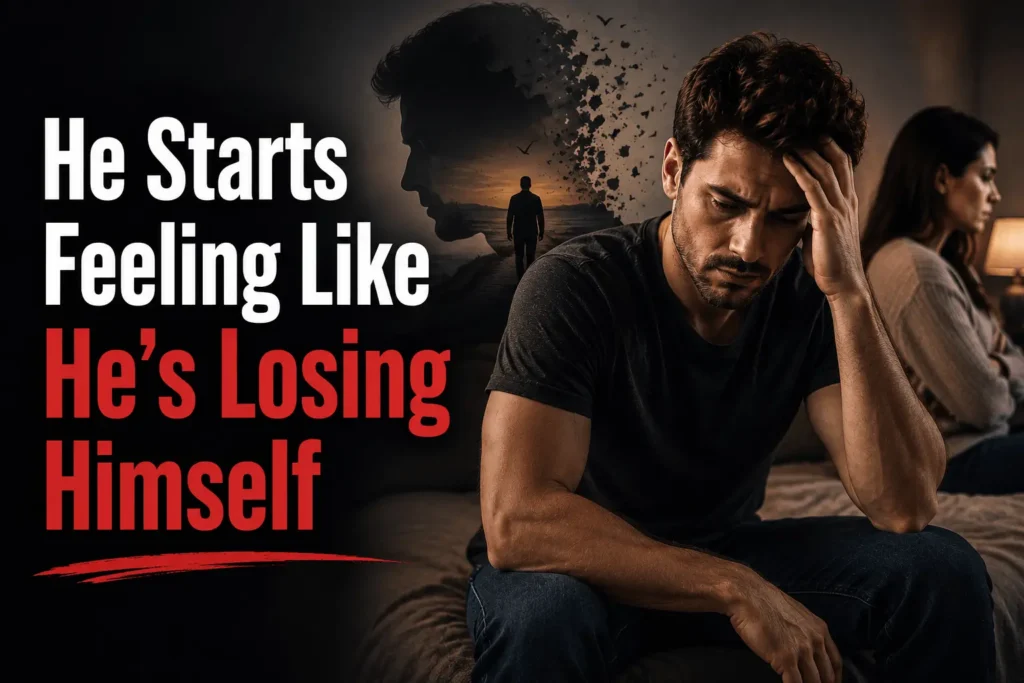
One of the most overlooked reasons men gradually lose interest in a relationship has nothing to do with love itself. It has to do with identity. At the beginning of a relationship, spending every possible moment together feels exciting. You want to know everything about each other, share every experience, and naturally make the other person a priority. While this closeness is beautiful, problems begin when two people slowly stop living their own lives outside the relationship. Hobbies disappear, friendships become less frequent, personal goals are placed on hold, and almost every decision begins revolving around the relationship. At first this feels like commitment, but over time it can create an unhealthy sense of emotional dependence.
Many men have difficulty explaining this feeling because they don’t necessarily want less love—they simply want to feel like themselves again. If every free evening must be spent together, every hobby becomes a source of conflict, or every personal ambition is viewed as choosing work or friends over the relationship, emotional pressure quietly begins to build. Instead of feeling supported, he starts feeling restricted. The relationship that once gave him energy slowly begins taking it away. This isn’t because his feelings disappeared overnight; it’s because he no longer feels he has room to grow as an individual.
Healthy relationships create a balance between togetherness and independence. Two people should share a life without giving up the parts of themselves that made them interesting in the first place. Supporting each other’s dreams, encouraging personal growth, and respecting healthy boundaries doesn’t weaken love—it strengthens it. Ironically, when both partners continue developing as individuals, they bring fresh experiences, new conversations, and renewed confidence back into the relationship. That continuous growth keeps attraction alive because each person still has something new to discover about the other.
5. Emotional Conversations Slowly Disappear
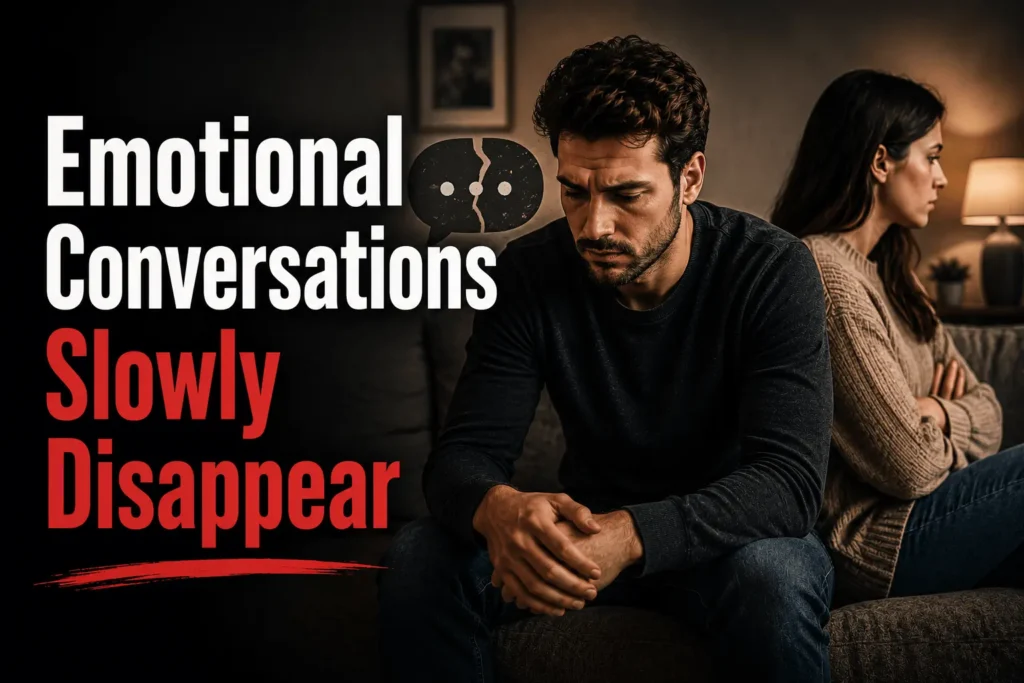
When relationships begin, conversations seem endless. You talk about childhood memories, future dreams, embarrassing stories, personal fears, favorite movies, and random thoughts that somehow become meaningful simply because you’re sharing them together. Those conversations create emotional intimacy, and emotional intimacy is one of the strongest foundations of lasting attraction. However, as daily responsibilities increase, many couples unknowingly replace meaningful conversations with practical ones. Instead of asking, “How are you really feeling?” they ask, “Did you pay the electricity bill?” Instead of sharing dreams, they discuss schedules. Instead of laughing together, they scroll through their phones in silence.
This shift happens so gradually that neither partner notices what’s missing. They still speak every day, but the conversations no longer create emotional connection. Without realizing it, they stop learning about each other. They stop asking curious questions. They stop sharing their fears and celebrating their victories. Eventually, the relationship begins to feel functional rather than emotionally fulfilling. A man may not even recognize why he feels distant—he simply knows that the connection doesn’t feel as deep as it once did.
The solution isn’t necessarily spending more hours together. It’s making the time you already spend together more meaningful. Put the phones away during dinner. Ask questions that don’t have one-word answers. Share something you’ve been thinking about lately. Talk about future goals, childhood memories, or even the challenges you’re currently facing. Emotional intimacy isn’t built through quantity alone; it’s built through quality. Couples who continue having meaningful conversations after years together often maintain stronger attraction because they never stop discovering each other.
6. He Begins Associating the Relationship With Stress Instead of Comfort
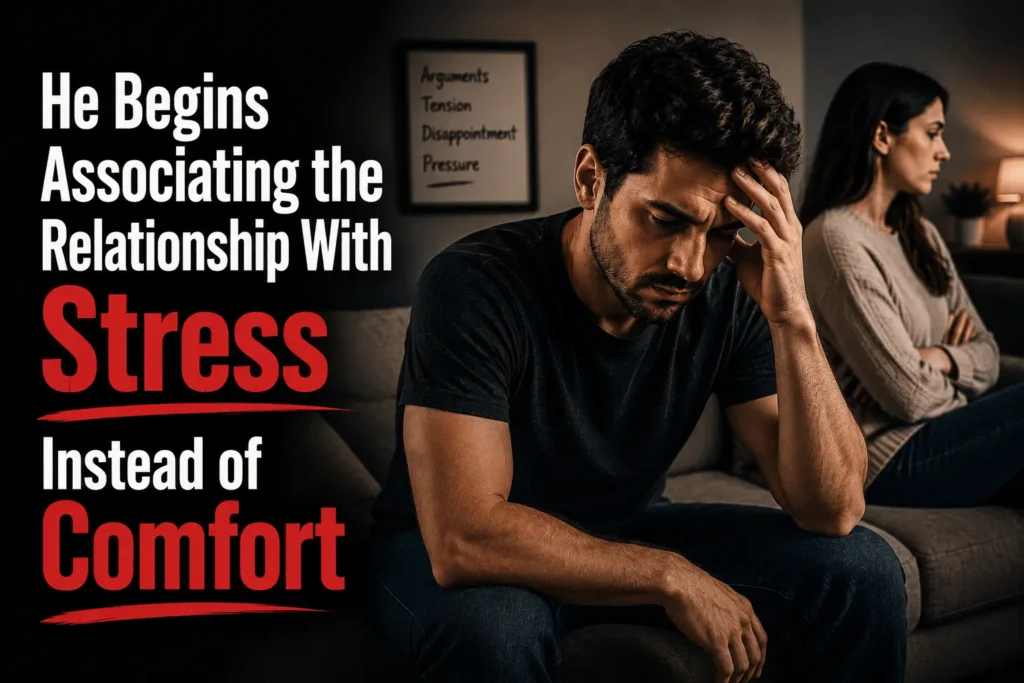
Every relationship has difficult seasons. Financial pressure, career changes, family responsibilities, health concerns, and unexpected life events can test even the strongest couples. The problem isn’t stress itself—it’s when the relationship becomes another source of stress instead of a place to recover from it. Imagine working through an exhausting day only to come home expecting another argument, another criticism, or another emotionally draining conversation. After enough repetitions, the brain naturally begins connecting the relationship with emotional tension.
Psychologists explain that our minds constantly build emotional associations. We associate certain songs with memories, certain places with feelings, and certain people with emotional experiences. The same thing happens inside relationships. If most interactions revolve around complaints, accusations, or unresolved issues, those emotions slowly become attached to the relationship itself. This doesn’t mean love has disappeared, but it does mean that being together no longer feels emotionally refreshing. Instead of feeling relieved when he sees your name on his phone, he may unconsciously prepare himself for another stressful interaction.
This pattern can be changed by intentionally creating more positive emotional experiences together. Laugh more often. Celebrate small achievements. Watch a favorite movie, cook together, go for an evening walk, or simply enjoy each other’s company without discussing problems every single time. Difficult conversations are necessary, but they shouldn’t become the only conversations. The happiest couples understand that emotional safety is created through hundreds of small positive moments that outweigh the negative ones. Those moments remind both partners why they chose each other in the first place.
Can a Man Regain Interest After Losing It?
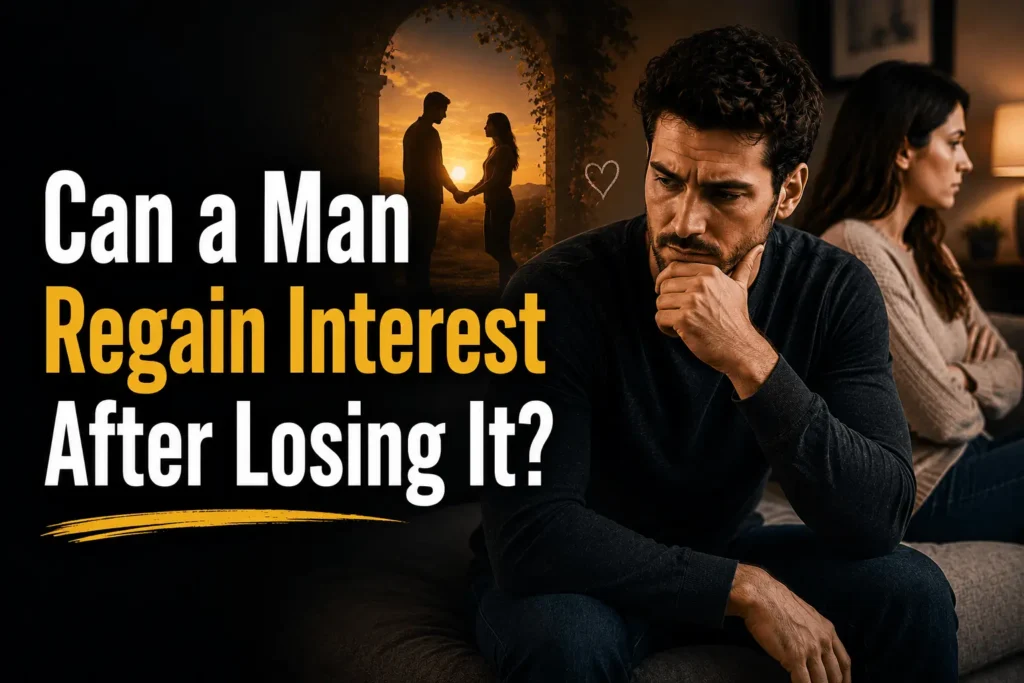
This is one of the most common questions relationship experts receive, and the answer is encouraging: yes, in many cases he can. However, it depends on why the emotional distance developed in the first place.
If interest faded because of constant conflict, poor communication, emotional neglect, or a relationship that became trapped in routine, those issues can often be addressed. On the other hand, if the relationship involved repeated dishonesty, a complete loss of trust, or incompatible life goals, rebuilding attraction becomes much more difficult.
Many couples make the mistake of trying to solve emotional distance by doing more of what isn’t working. They send more messages, ask for constant reassurance, or pressure the other person into talking before they’re ready. While those reactions are understandable, they often increase emotional pressure instead of reducing it.
Healthy reconnection begins with understanding, not panic. It starts by asking honest questions, listening without becoming defensive, and creating an environment where both people feel emotionally safe enough to share what’s really happening beneath the surface.
What You Should Do Instead of Chasing Him

When someone you love starts pulling away, your first instinct may be to hold on tighter. You might check your phone every few minutes, overanalyze every message, or worry that giving him space means losing him forever. While those feelings are completely natural, acting on them often produces the opposite result.
Instead of chasing, focus on rebuilding your own emotional balance. Continue investing in your friendships, career, hobbies, and personal growth. Not because you’re trying to make him jealous, but because a healthy relationship should add to your life—not become your entire identity.
At the same time, improve the quality of your communication. Replace accusations with curiosity. Instead of asking, “Why don’t you care about me anymore?” try asking, “I’ve noticed we’ve seemed a little disconnected lately. Is there anything you’ve been struggling with that we should talk about?”
That small shift changes the conversation from conflict to cooperation.
The Biggest Mistakes That Push Men Even Further Away
When fear takes over, people often make decisions they later regret. One of the biggest mistakes is assuming that every period of emotional distance means the relationship is ending. That assumption creates panic, and panic often leads to behaviors that increase pressure.
Another common mistake is trying to become someone else simply to keep another person’s attention. Pretending to like different things, hiding your true feelings, or constantly sacrificing your own needs may work temporarily, but it rarely creates lasting happiness. Healthy relationships are built on authenticity, not performance.
Finally, many couples stop expressing appreciation because they assume their partner already knows how they feel. Love is strongest when it is expressed consistently, not assumed silently.
Final Thoughts
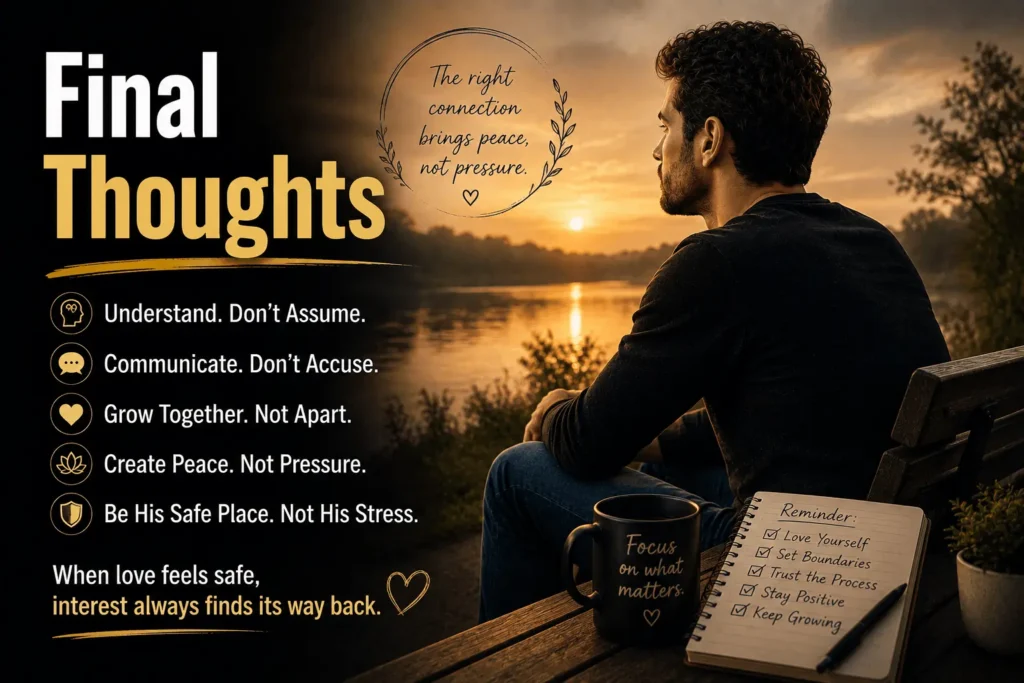
Relationships rarely succeed because two people are perfect. They succeed because two imperfect people continue choosing each other, even when life becomes complicated.
If you’ve been asking yourself why the man you love seems less interested than he once was, remember this: emotional distance is often a signal, not a final decision. It invites both partners to slow down, communicate honestly, and reconnect before routine replaces intimacy.
Every meaningful relationship experiences seasons. There are moments filled with excitement and moments filled with challenges. What separates lasting couples from those who drift apart isn’t the absence of problems—it’s their willingness to understand each other instead of becoming opponents.
Small acts of appreciation, thoughtful conversations, shared experiences, and emotional support may seem insignificant on their own, but over time they become the foundation of lasting love. Attraction isn’t maintained through one grand gesture. It’s built through hundreds of small moments in which both people continue making each other feel valued.
If you’re willing to nurture those moments, your relationship has a much greater chance of growing stronger instead of slowly growing apart.
If you’d like to learn more about the emotional psychology that often influences commitment and long-term attraction, His Secret Obsession is a popular relationship guide that explores these ideas in greater depth. Many readers have found its practical insights helpful for improving communication and strengthening emotional connection.
Discover the psychology-based relationship guide helping women understand what truly makes men emotionally attached and deeply connected again.
Frequently Asked Questions
Popular Relationship Psychology Guides
- 15 Signs He Wants a Serious Relationship With You
- How to Make Him Feel Emotionally Safe Around You
- How to Build Emotional Intimacy With a Man: 15 Simple Ways
- How a Guarded Man Tests You: 15 Psychology Signs
- What Makes a Man Feel Safe With a Woman? 13 Psychology Tips
- How to Make Him Miss You Like Crazy: 15 Psychology Tips
Pingback: 15 Signs He Wants a Serious Relationship With You
Pingback: What Makes a Man Feel Safe With a Woman? 13 Psychology Tips
Pingback: How to Build Emotional Intimacy With a Man: 15 Simple Ways
Pingback: How to Make Him Miss You Like Crazy: 15 Psychology Tips
Pingback: How to Make Him Obsessed With You Without Chasing
Pingback: Relationship Anxiety: 15 Signs, Causes & Stop Overthinking
Pingback: Why Men Ghost Women They Like: 15 Psychology-Backed Reasons