
Learn how to make him feel emotionally safe around you with 15 psychology-backed tips that build trust, emotional intimacy, and a stronger relationship.
Relationships rarely fail because people stop loving each other overnight. More often, they slowly lose the feeling that it’s safe to be completely themselves. A man may still care deeply, but if he constantly feels judged, misunderstood, or emotionally unprotected, he’ll naturally begin hiding parts of himself.
This is why emotional safety matters more than grand romantic gestures. It’s what allows conversations to become honest, disagreements to become productive, and affection to feel genuine instead of forced. When a man feels emotionally safe with you, he doesn’t have to pretend to be perfect. He knows his fears, dreams, mistakes, and emotions won’t be used against him later.
Many women believe emotional safety means constantly agreeing with him or never expressing their own needs. That’s not true. Healthy emotional safety is built through respect, empathy, consistency, and trust—not silence or sacrifice.
Psychology suggests that people open their hearts when they believe they’ll be accepted rather than criticized. The more emotionally secure someone feels, the deeper they’re willing to love.
If you’ve ever wondered how to make him feel emotionally safe around you, the answer isn’t complicated—but it does require intention. Small everyday habits often create stronger emotional intimacy than expensive dates or dramatic declarations of love.
In this guide, you’ll discover 15 psychology-backed ways to help him relax, trust you more deeply, and create the kind of emotional connection that keeps love growing long after the honeymoon phase ends.
Why Emotional Safety Matters to Men

Many people assume men don’t need emotional reassurance because they rarely talk about their feelings. In reality, many simply learn to hide vulnerability. From a young age, they’re often taught to appear strong, solve problems alone, and avoid showing emotional pain.
When a relationship becomes a place where he feels accepted instead of evaluated, his emotional walls naturally begin to lower. That safety encourages honest conversations, deeper affection, and stronger commitment. Emotional safety isn’t about removing all conflict—it’s about knowing disagreements won’t threaten the relationship or his self-worth.
1. Listen Without Immediately Trying to Fix Him
One of the greatest gifts you can give someone is your full attention.
When he talks about work stress, family issues, or personal fears, resist the urge to jump in with advice before fully understanding him. Often, he isn’t looking for a solution—he wants someone who genuinely hears him.
Instead of interrupting, ask gentle questions like:
- “How did that make you feel?”
- “What was the hardest part?”
- “What do you need from me right now?”
Active listening communicates something powerful: “Your emotions matter.” That simple message builds emotional security faster than perfect advice ever could.
2. Never Use His Vulnerability Against Him Later
Nothing destroys emotional trust faster than weaponizing personal confessions during arguments.
If he once admitted feeling insecure, afraid, or overwhelmed, avoid bringing those moments back as criticism. When vulnerability becomes ammunition, people stop opening up.
Instead, protect what he shares privately. Make him feel confident that difficult conversations remain safe even when disagreements happen. Trust grows when honesty never becomes a liability.
3. Stay Calm During Difficult Conversations

Arguments don’t scare most people nearly as much as emotional unpredictability.
If every disagreement turns into yelling, sarcasm, silent treatment, or personal attacks, he’ll slowly stop expressing himself altogether.
Healthy conflict looks different.
Pause before reacting.
Speak respectfully.
Focus on solving the issue rather than winning.
A calm response tells him: “We’re on the same team—even when we disagree.” That mindset strengthens emotional intimacy instead of weakening it.
4. Appreciate His Efforts More Than His Perfection
Everyone wants to feel valued. Instead of only noticing what he forgot, acknowledge what he consistently does well.
Simple appreciation might sound like:
- “I noticed how hard you’ve been working.”
- “Thank you for always making time for us.”
- “I really appreciate that.”
Feeling appreciated encourages emotional openness because people naturally move toward relationships where they feel seen instead of constantly evaluated.
5. Respect His Feelings Even When You See Things Differently
Validation doesn’t mean agreement. You can disagree with someone’s opinion while still respecting how they feel.
Instead of saying, “You’re overreacting.”
Try saying, “I understand why you’d feel that way.”
That small shift lowers defensiveness and encourages honest communication. People become emotionally safer when they know their emotions won’t immediately be dismissed.
6. Keep Your Promises—Even the Small Ones
Trust isn’t built through one dramatic moment. It’s built through consistency.
Showing up when you say you will, remembering important conversations, keeping small commitments, and following through all communicate reliability.
Reliability creates predictability. Predictability creates safety.
When your actions consistently match your words, emotional intimacy naturally becomes stronger because he no longer wonders where he stands.
7. Respect His Need for Healthy Space

Many women worry that giving a man space means he’ll lose interest. In reality, healthy relationships allow both partners room to recharge without questioning the relationship itself.
Sometimes he needs time to process stress, focus on work, or simply think quietly. That doesn’t automatically mean he’s pulling away emotionally. Respecting those moments shows confidence rather than insecurity.
Instead of sending repeated messages demanding reassurance, let him know you’re there whenever he’s ready to talk. Ironically, people often return faster when they don’t feel pressured.
Emotional safety grows when he knows he can take a breath without fearing accusations or guilt. Space isn’t the opposite of connection—it’s often what helps preserve it.
8. Encourage His Dreams Instead of Competing With Them
One of the strongest emotional bonds forms when two people genuinely support each other’s growth.
Ask about his goals. Celebrate small victories. Encourage him when setbacks happen. Your belief in him can become one of the safest places he has.
Support doesn’t mean ignoring your own dreams. Healthy couples cheer for each other rather than compete for attention or success.
Simple words like, “I believe you can do this.” or “I’m proud of how hard you’re working.” can have a deeper emotional impact than you realize.
A relationship becomes emotionally safe when both partners feel their ambitions are respected, not threatened.
9. Apologize Without Becoming Defensive
Everyone makes mistakes. The difference between healthy and unhealthy relationships isn’t perfection—it’s accountability.
If you’ve hurt him, avoid explaining your intentions before acknowledging his feelings.
Instead of saying, “That’s not what I meant.” Try saying, “I understand why that hurt you. I’m sorry.”
A sincere apology repairs emotional trust because it shows you’re willing to protect the relationship instead of protecting your ego.
People feel emotionally safe with those who accept responsibility rather than constantly defend themselves.
10. Handle Conflict Like You’re Solving a Problem Together
Arguments shouldn’t feel like two people trying to defeat each other. Healthy couples treat the problem as the enemy—not each other. Focus on understanding before proving your point.
Use phrases like:
- “Let’s figure this out together.”
- “How can we solve this?”
- “I want us both to feel heard.”
This mindset transforms disagreements into opportunities for deeper understanding. When he knows conflict won’t automatically turn into blame, criticism, or emotional punishment, he’ll become much more willing to communicate honestly.
Emotional intimacy grows when love feels bigger than winning an argument.
11. Celebrate His Emotional Honesty

Many men don’t hear positive feedback when they express emotions. Instead, they’re often told they’re overthinking, weak, or too sensitive. Be different. If he shares something vulnerable, appreciate the trust behind it.
You might say, “Thank you for telling me that.” or “I’m glad you feel comfortable sharing this with me.”
Positive reinforcement teaches his brain that emotional openness leads to connection—not rejection.
The safer vulnerability feels today, the easier tomorrow’s conversations become.
12. Build Small Daily Rituals of Connection
Emotional intimacy isn’t created by one perfect weekend getaway. It’s built through ordinary moments repeated consistently.
Simple habits like:
- Asking about each other’s day.
- Hugging before leaving home.
- Eating dinner together.
- Sending thoughtful messages.
- Checking in before bed.
These rituals quietly communicate, “No matter how busy life gets, we still choose each other.” Consistency creates emotional security because it reminds both partners that love isn’t only shown during special occasions.
Small moments eventually become the strongest foundation of a lasting relationship.
13. Let Him Be Imperfect Without Fear
Nobody feels emotionally safe if they believe every mistake will become proof that they’re not good enough. Allow room for growth. Correct problems respectfully instead of attacking his character. Replace criticism with curiosity.
Instead of, “You always mess things up.” Try, “Help me understand what happened.” This approach keeps communication open instead of triggering defensiveness.
When someone feels accepted despite imperfections, they’re far more motivated to improve—not because they’re forced to, but because they genuinely want to.
14. Protect the Relationship During Stressful Seasons
Life isn’t always romantic.
Jobs become demanding.
Families create pressure.
Health challenges appear.
Financial stress happens.
Emotionally safe couples remember that difficult seasons are temporary. Rather than turning against each other, they become teammates.
Sometimes the greatest act of love is simply saying, “We’ll get through this together.”
Those words create emotional stability that lasts far beyond the stressful moment itself. Partnership means standing beside each other—even when life becomes messy.
15. Be the Place Where He Can Exhale

Everyone needs one place where they don’t have to perform. A relationship becomes extraordinary when home feels emotionally peaceful rather than emotionally exhausting. When he’s with you, let him feel accepted.
Not because he’s perfect. Not because he never fails. But because he’s human. Emotional safety isn’t about removing every problem. It’s about creating a relationship where honesty, kindness, trust, and understanding always have more power than fear.
That’s the kind of connection people rarely forget.
Signs He Finally Feels Emotionally Safe Around You
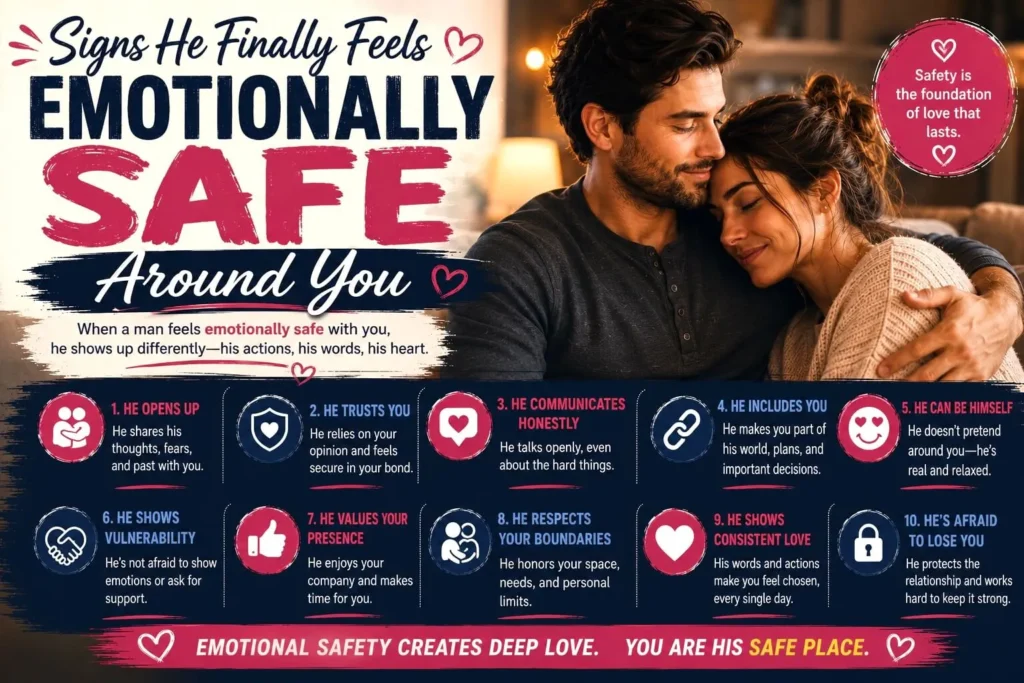
You may notice subtle but meaningful changes once emotional safety has been established.
- He shares personal thoughts without hesitation.
- He talks openly about his fears and dreams.
- He asks for your opinion on important decisions.
- He communicates honestly instead of withdrawing.
- He becomes more affectionate naturally.
- He admits mistakes without fear.
- He includes you in future plans.
- He feels comfortable being himself around you.
These aren’t signs of weakness—they’re signs of deep trust.
Final Thoughts

Every healthy relationship is built one conversation, one act of kindness, and one moment of trust at a time.
If you want to know how to make him feel emotionally safe around you, remember that emotional safety isn’t created through perfection. It’s created through consistency. The way you listen, respond, encourage, and protect each other’s hearts every day matters far more than grand romantic gestures.
When a man feels emotionally safe, he doesn’t just open his mind—he opens his heart. And that’s where lasting love begins.
Ready to Create an Even Deeper Emotional Connection?
Discover the psychology-based relationship guide that has helped thousands of women understand what truly inspires lasting love, trust, and commitment.
Trusted by thousands of women looking to build stronger emotional intimacy, deeper commitment, and lasting relationships through psychology-backed insights.
Frequently Asked Questions
You might also find these guides helpful
- 15 Signs He Wants a Serious Relationship With You
- How to Build Emotional Intimacy With a Man: 15 Simple Ways
- How a Guarded Man Tests You: 15 Psychology Signs
- What Makes a Man Feel Safe With a Woman? 13 Psychology Tips
- How to Make Him Miss You Like Crazy: 15 Psychology Tips
Pingback: 15 Signs He Wants a Serious Relationship With You
Pingback: How to Make Him Miss You Like Crazy: 15 Psychology Tips
Pingback: Why Do Average Girls Make Everyone Obsessed? 13 Psychology
Pingback: Why Men Lose Interest in Relationships And How to Prevent It
Pingback: What Makes a Man Feel Safe With a Woman? 13 Psychology Tips
Pingback: Signs That He Is in Love With You: 15 Psychology-Backed Sign