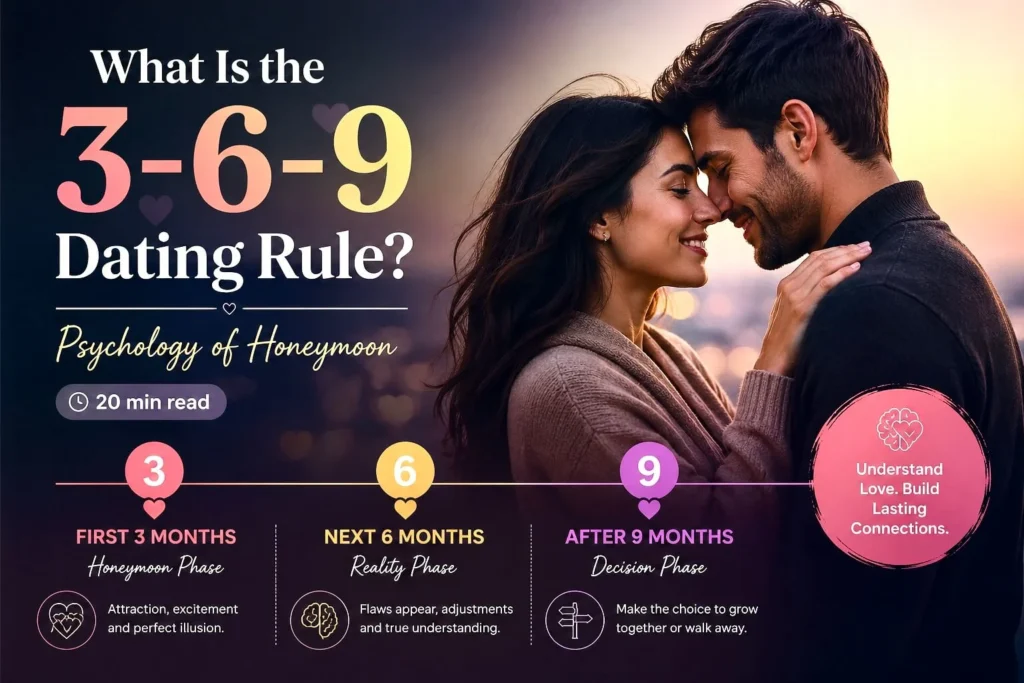
Discover What Is the 3-6-9 Dating Rule? Psychology of Honeymoon Proven full Guide 2026
Have You Ever Felt This?
You meet someone and everything feels perfect. The conversations flow naturally, the attraction feels strong, and within just a few weeks you start believing this is the right person. You invest emotionally very fast, you imagine a future, and you start prioritizing them over everything else. But after a few months, something changes. The excitement fades, small problems begin to appear, and slowly the relationship starts falling apart.
If this has ever happened to you, the problem is not your luck or your personality. The real issue is your emotional timing and how quickly you attach. This is exactly where the 3-6-9 dating rule becomes powerful. It explains how relationships evolve over time and why most people fail because they do not understand these stages.
What Is the 3-6-9 Dating Rule?
The 3-6-9 dating rule is a simple but highly effective relationship framework. It suggests that every relationship goes through three major emotional stages: the first 3 months, the first 6 months, and the first 9 months. Each stage reveals a different layer of reality, and each stage tests the strength of your connection in a different way.
This concept has become popular because it explains relationship patterns in a very practical way. Instead of relying only on feelings, it teaches you to observe behavior and emotional consistency over time. When you understand this rule, you stop making rushed decisions. You begin to see people clearly, and you naturally avoid toxic or incompatible relationships. It shifts your mindset from emotional impulsiveness to strategic awareness.
Why This Rule Is Becoming So Popular
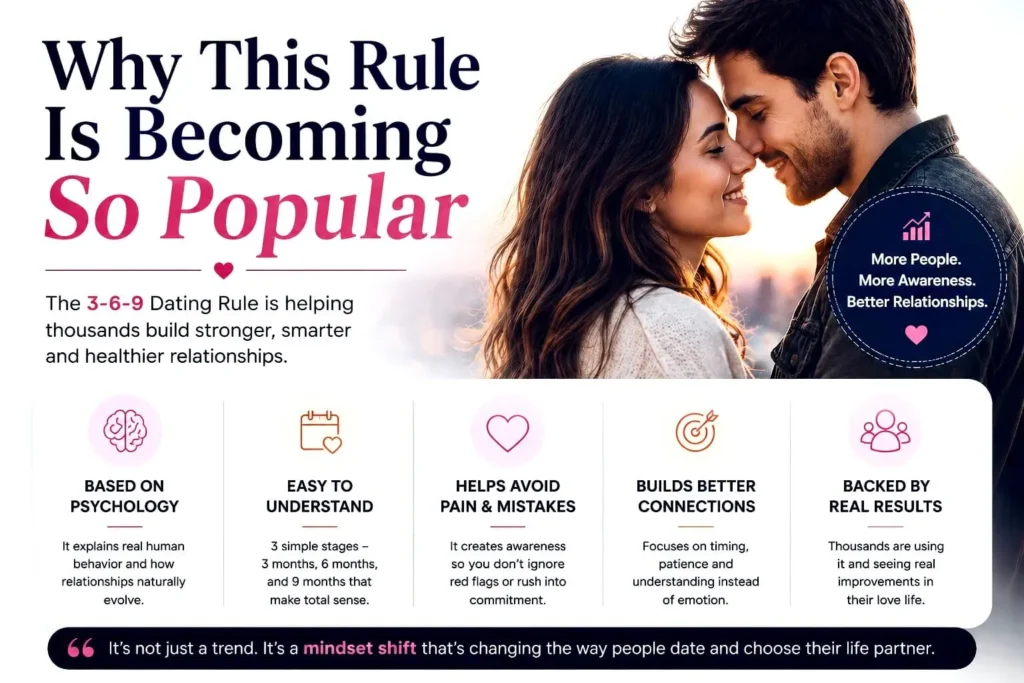
The reason the 3-6-9 rule is going viral is because it aligns perfectly with real-life experiences. Almost everyone has gone through a relationship that felt amazing at the beginning but did not last. This rule explains why that happens.
In the early stage, your brain is driven by chemicals like dopamine that create excitement and attraction. But as time passes, those chemicals stabilize and reality becomes visible. This transition is where most relationships break. The rule helps you prepare for this shift instead of being shocked by it.
In modern dating, where people move fast and expectations are high, this rule acts like a filter. It helps you slow down, observe patterns, and make smarter decisions instead of emotional mistakes.
Phase 1: The First 3 Months – The Illusion Phase
The first three months of any relationship are often called the honeymoon phase. During this period, everything feels exciting and almost perfect. You enjoy every conversation, you overlook flaws, and even small things about the other person seem attractive.
This happens because your brain is flooded with dopamine and other pleasure chemicals. You are not seeing the person as they truly are, but rather as how your mind wants them to be. This creates an illusion of perfection that feels very real.
Many people mistake this phase for true love. They rush into commitment, make future plans, and emotionally invest deeply. But the truth is, at this stage, you barely know the person. You are only seeing a curated version of them, not their complete personality.
The Biggest Mistake in the First 3 Months
The most common mistake people make during the first three months is emotional over-investment. They start behaving as if the relationship is already secure and permanent. They become overly available, overly expressive, and sometimes even dependent.
This creates two major problems. First, it increases your emotional risk because you are investing without enough information. Second, it can push the other person away because the intensity becomes overwhelming.
At this stage, the goal should not be to impress or attach quickly. The goal should be to observe. Notice how the person behaves, how they communicate, and how consistent they are. Attraction is easy to fake in the beginning, but consistency cannot be maintained by someone who is not genuinely aligned with you.
What You Should Do in the First 3 Months
Instead of rushing, you need to slow down your emotional pace. Focus on understanding rather than attaching. Pay attention to actions, not just words. Anyone can say the right things in the beginning, but actions reveal true intent over time.
Maintain your own life. Do not make the relationship your entire world. Keep your routines, your work, and your personal growth intact. This not only protects you emotionally but also makes you more attractive.
Give space to the relationship to grow naturally. When you do not force things, you allow reality to reveal itself. This is the smartest way to avoid future disappointment.
Phase 2: The First 6 Months – The Reality Phase
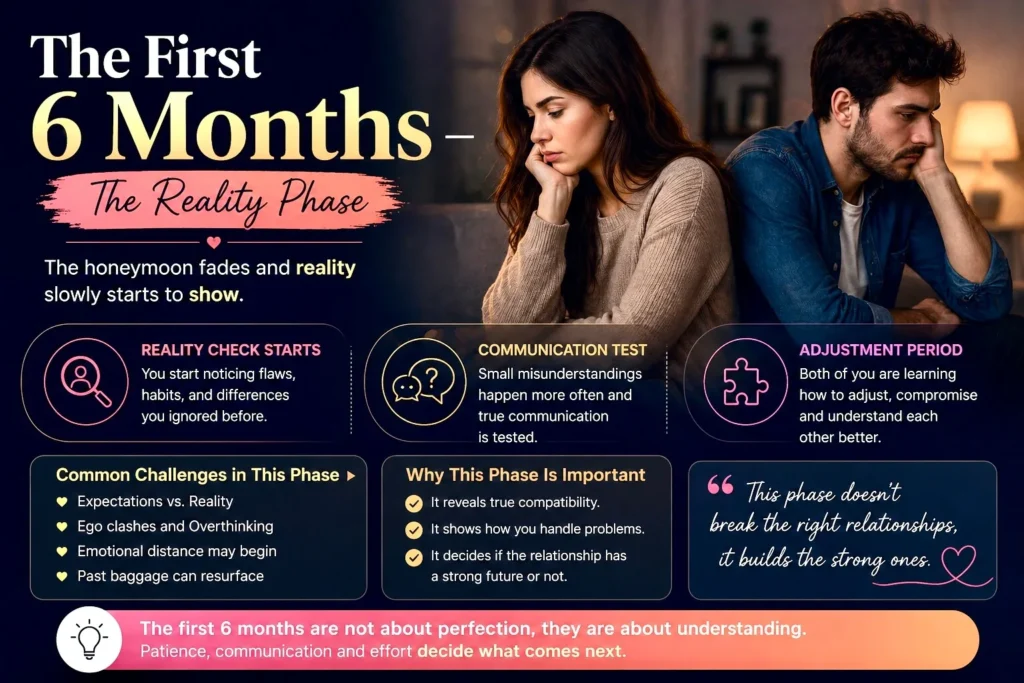
Around the six-month mark, the relationship begins to shift. The initial excitement starts to settle, and you begin to notice things that were invisible before. Small habits, differences in values, communication styles, and expectations start becoming clearer.
This is where many people feel confused. They think something is wrong because the relationship does not feel the same as before. But in reality, this is not a problem. This is the moment when the relationship becomes real.
The illusion is fading, and authenticity is taking its place. This phase is not about losing love. It is about transitioning from attraction to understanding.
Why Most Relationships Fail at 6 Months
Most relationships fail at this stage because people were not prepared for the shift. They believed the initial excitement would last forever. When reality appears, they feel disappointed and assume the connection is gone.
Another major reason is poor communication. Instead of discussing problems calmly, people react emotionally. Ego clashes, misunderstandings, and unmet expectations create distance.
But the truth is, if a relationship survives this stage, it has real potential. This is where emotional maturity matters more than attraction. How you handle this phase determines whether your relationship grows or breaks.
What You Should Do at 6 Months
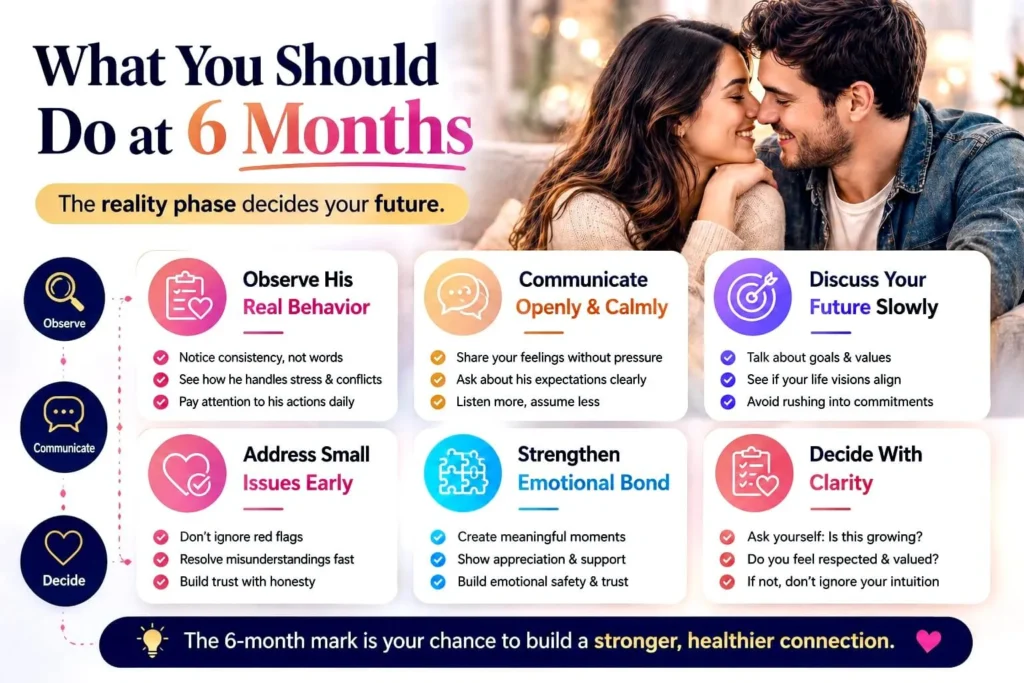
At this stage, communication becomes your most powerful tool. You need to express your thoughts clearly and also listen actively. Do not assume things. Ask questions and understand your partner’s perspective.
Let go of ego. Relationships are not about winning arguments. They are about building understanding. Focus on solving problems instead of proving points.
Be patient. Every relationship has differences. What matters is how you handle them. If both people are willing to grow, this phase can strengthen the bond significantly.
If he has started pulling away and you feel confused about what went wrong, there is a deeper psychological trigger most women don’t understand. You can explore it here:
Based on real relationship psychology principles, not guesswork. This approach has helped thousands understand male behavior and build stronger emotional connections.
Phase 3: The First 9 Months – The Decision Phase
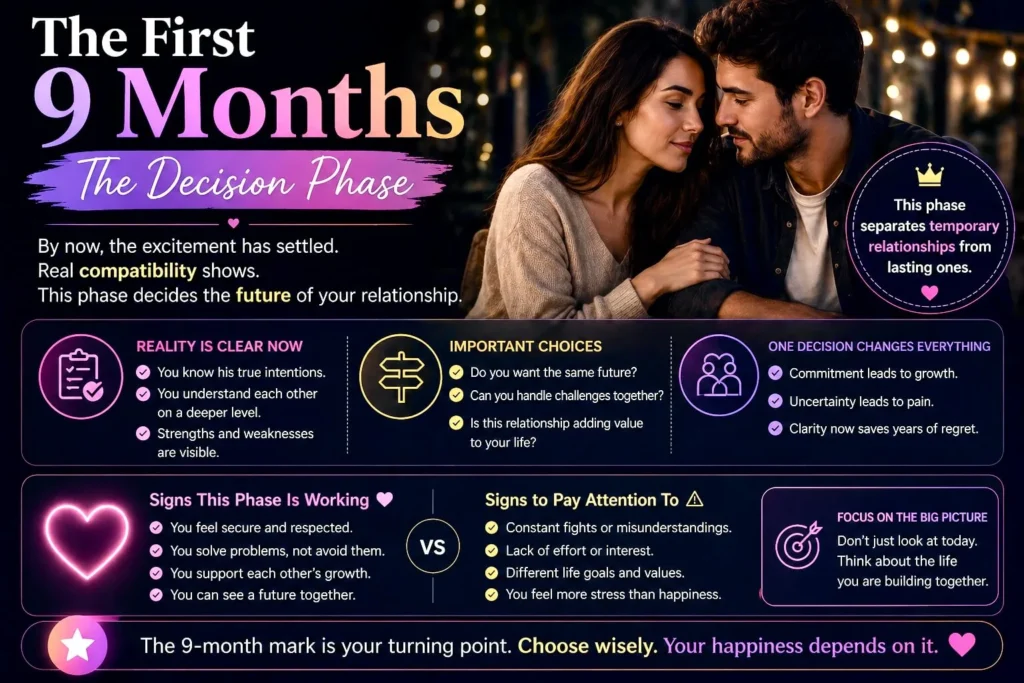
By the time you reach nine months, the relationship has revealed its true nature. You have seen each other in different situations. You understand strengths, weaknesses, habits, and emotional patterns.
This is the stage where you need to make a decision. Not based on excitement, but based on reality. Do you feel stable with this person? Do you trust them? Can you imagine long-term compatibility?
At this point, love becomes less about feelings and more about choice. You are no longer driven by temporary attraction. You are deciding based on clarity and experience.
Signs of a Strong Relationship at 9 Months
A strong relationship at this stage feels calm and secure. You feel comfortable being yourself. There is trust, respect, and emotional safety. Even after disagreements, the connection remains intact.
You both understand each other’s needs and boundaries. There is mutual effort to maintain the relationship. Growth becomes a shared goal instead of an individual struggle.
These are signs that the relationship has moved beyond attraction and entered a stable, meaningful phase.
Signs of a Weak Relationship at 9 Months
If the relationship still feels unstable, it is a warning sign. Frequent conflicts, lack of respect, poor communication, and emotional distance indicate deeper incompatibility.
If the same problems keep repeating without resolution, it means growth is not happening. If one person is putting in all the effort while the other remains passive, the balance is broken.
At this stage, ignoring these signs will only lead to bigger problems later. It is better to accept reality than to force something that is not working.
Why the 3-6-9 Rule Is So Powerful
This rule shifts your focus from emotions to awareness. It teaches you that love is not just about how you feel, but about how the relationship evolves over time.
It protects you from rushing into wrong commitments. It helps you identify red flags early and avoid unnecessary heartbreak. It also helps you build stronger relationships because you understand the process instead of reacting blindly.
When you follow this rule, you stop chasing intensity and start valuing stability. That alone changes your entire dating experience.
The Biggest Mistake People Make
Most people follow the same pattern. In the first three months, they fall deeply in love. At six months, they feel confused and start doubting. By nine months, the relationship either breaks or becomes toxic.
This happens because they confuse attraction with love. They believe feelings are enough, but ignore compatibility, communication, and consistency.
The truth is, people do not change suddenly. What changes is your perception. You start seeing what was always there, but hidden by initial excitement.
The Golden Formula You Must Remember
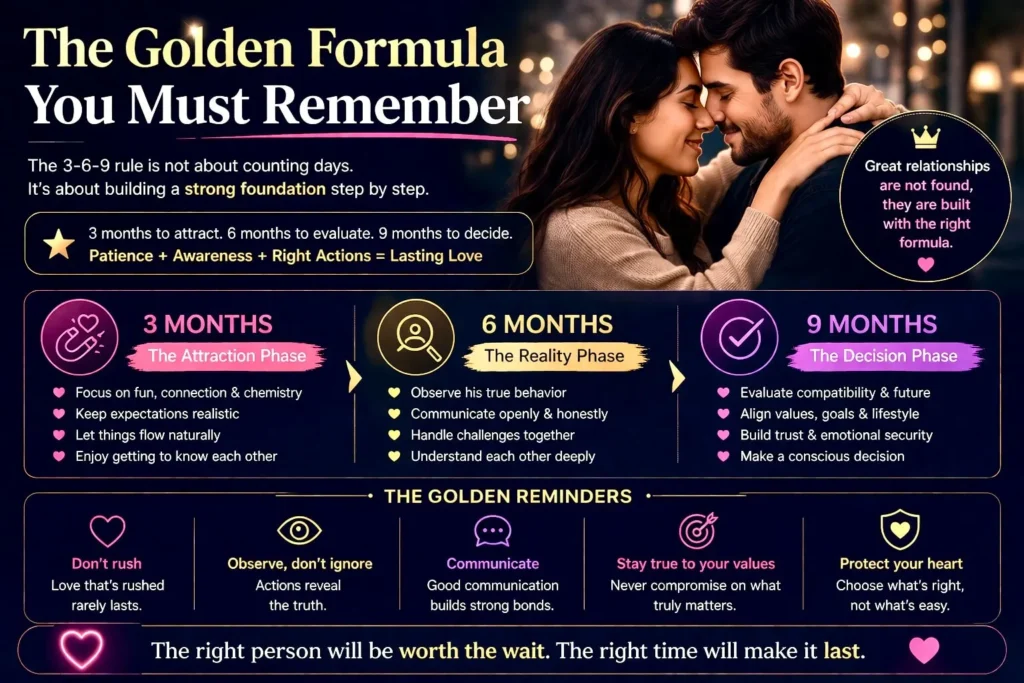
The entire rule can be simplified into one powerful formula.
- First 3 months are for observing.
- Six months are for understanding.
- Nine months are for deciding.
If you follow this structure, you will naturally avoid most relationship mistakes. You will not rush, you will not over-invest, and you will not ignore reality.
Male Psychology Insight You Should Know
In many relationships, one common misunderstanding is about effort. In the beginning, men often put in extra effort to impress. Over time, they become more natural and relaxed.
Many women interpret this change as loss of interest. But in reality, it is not always a loss of feelings. It is a shift from effort to comfort.
Understanding this difference can prevent unnecessary conflict. Instead of reacting emotionally, observe whether the core connection is still present.
Why Emotional Pressure Pushes People Away
When one partner becomes too controlling, needy, or insecure, it creates pressure. This pressure makes the other person feel restricted and overwhelmed.
Attraction grows in freedom, not in control. When you try to force closeness, you often create distance.
The solution is simple but powerful. Maintain your individuality. Give space. Focus on your own growth. When you are emotionally stable, the relationship also becomes more stable.
Real-Life Example of the 3-6-9 Rule
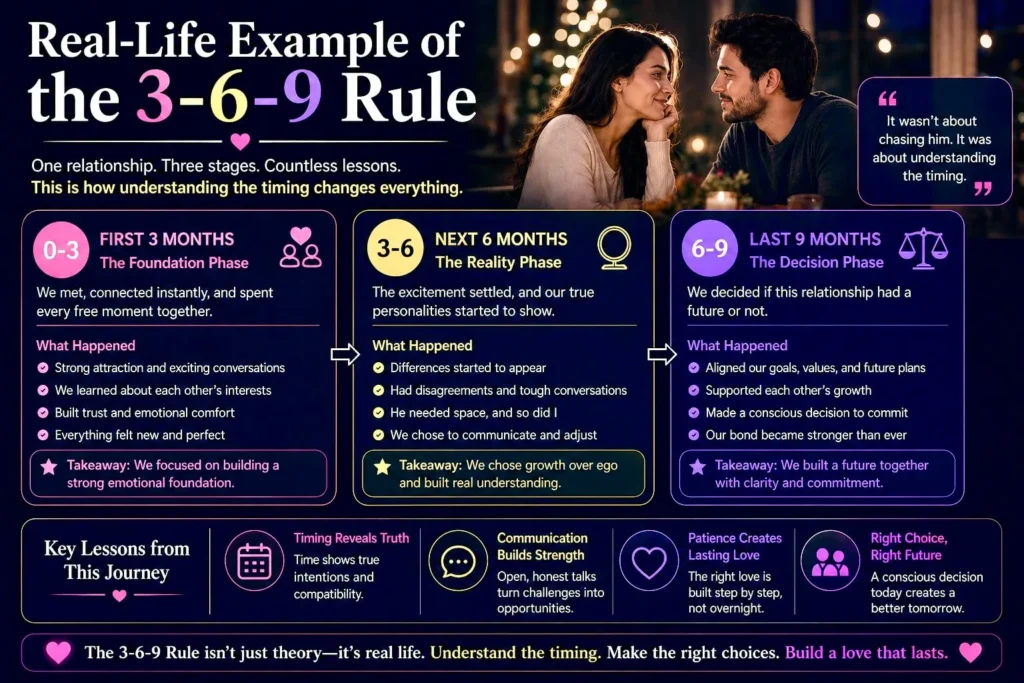
Imagine a couple who meet and instantly connect. In the first two months, they talk constantly and feel deeply attached. Everything seems perfect. Around the fifth month, communication reduces slightly. Differences start appearing. By the seventh month, they face arguments and misunderstandings.
If they handle this phase with maturity, by the ninth month they develop a strong bond. But if they react emotionally, the relationship ends. This pattern is extremely common. The only difference between success and failure is awareness.
Practical Tips to Make This Rule Work for You
Focus on actions instead of words. Words can be misleading, but actions reveal truth. Maintain your personal life and do not depend entirely on the relationship.
Set clear boundaries. Know what you can accept and what you cannot. Avoid being overly available or overly attached. Control overthinking. Not every small change is a problem. Learn to differentiate between real issues and temporary emotions.
When you apply these habits, you naturally become more confident and emotionally balanced.
Final Truth About Love and Relationships
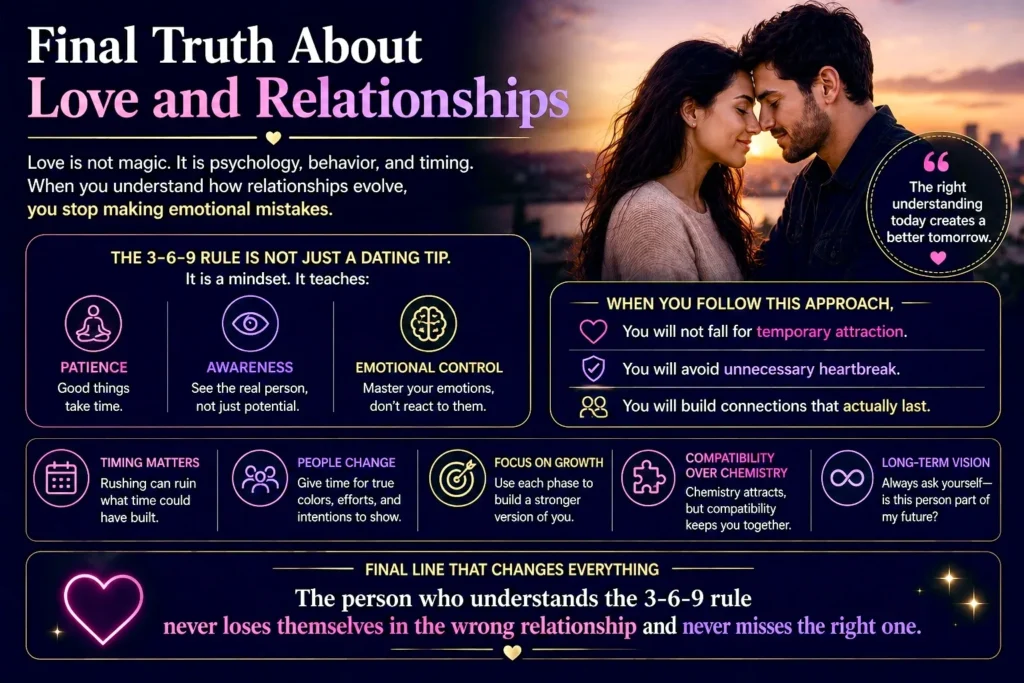
Love is not magic. It is psychology, behavior, and timing. When you understand how relationships evolve, you stop making emotional mistakes. The 3-6-9 rule is not just a dating tip. It is a mindset. It teaches patience, awareness, and emotional control.
If you follow this approach, you will not fall for temporary attraction. You will build connections that actually last.
Final Line That Changes Everything
The person who understands the 3-6-9 rule never loses themselves in the wrong relationship and never misses the right one. If you truly want to understand what makes a man emotionally attach and stay, there is a deeper psychological trigger most women never discover. This is not about chasing or forcing love, but about activating the right emotional response at the right time. You can explore it here:
Based on real relationship psychology principles, not guesswork. This approach has helped many women understand male behavior and build stronger emotional connections.
Frequently Asked Questions
You might also find these guides helpful
- Emotionally Distant Relationship 7 Signs & How to Fix It
- How to Stop Pushing Him Away – 11 Psychological Tips
- How to Make Him Regret Losing You (Psychology That Actually Works)
- How to Make Him Addicted to You (Psychology That Works)
- How to Make a Man Crave You Emotionally
- How to Make Him Obsessed With You – Psychology Tips
Pingback: How To Keep Him Attracted Even After Marriage (Psychology)
Pingback: What Makes a Man Sexually Addicted to a Woman? (Psychology)
Pingback: What Causes Hypersexuality in Males? The Hidden Psychology
Pingback: What Is the Biggest Red Flag in a Guy? Signs Never to Ignore
Pingback: What Makes a Man Choose One Woman Over Another? Psychology
Pingback: Psychology of Couples Sleeping Positions: What Says It
Pingback: How to Feel Confident Around Men: 11 Psychology Tricks
Pingback: How to Know If a Man Is Testing You: 9 Hidden Signs