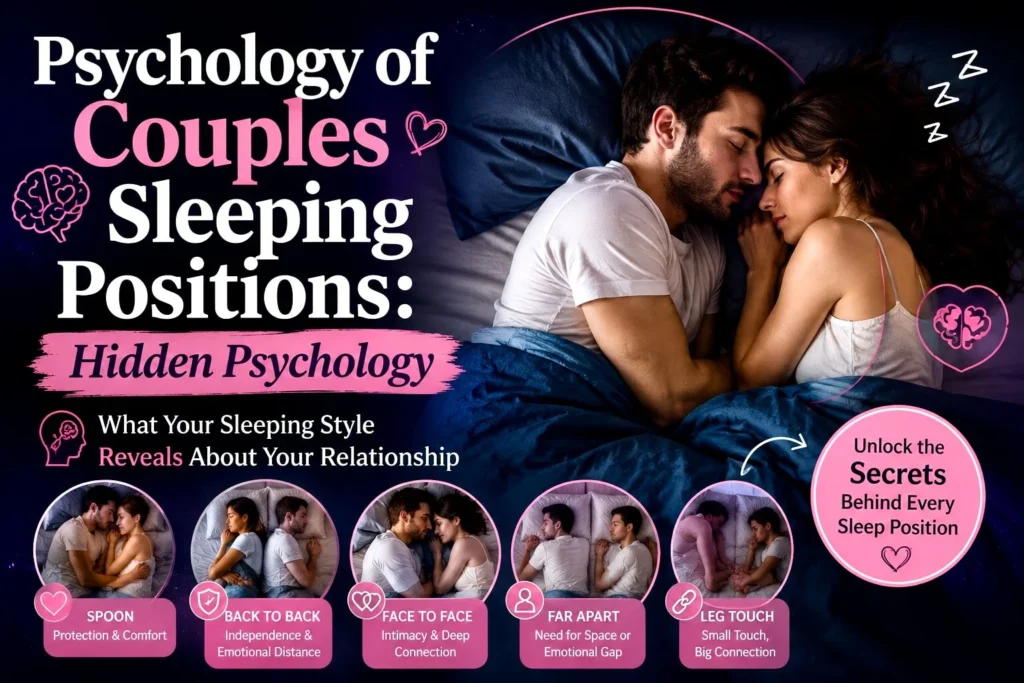
Your Sleeping Position May Reveal More Than You Think
Most couples never think deeply about the way they sleep together. Some sleep close all night, some turn away after a few minutes, while others need space to feel comfortable. But according to relationship experts and body language psychology, the way couples sleep can quietly reveal emotional connection, trust, comfort, attraction, and even hidden relationship issues.
That’s why the topic “psychology of couples sleeping positions” has become so popular online. People are curious to know what their sleeping habits secretly say about their relationship.
Do you and your partner sleep face-to-face? Back-to-back? Does one person hold the other tightly while sleeping? Or do both of you sleep far apart on opposite sides of the bed?
Believe it or not, sleeping positions can sometimes reflect emotional energy between two people. While no sleeping position can fully define a relationship, body language during sleep often shows what people feel naturally without even realizing it.
During sleep, the brain relaxes and the body becomes more honest. Small habits like touching feet, hugging while sleeping, or needing personal space may reveal comfort levels, emotional attachment, independence, trust, or emotional distance.
In this guide, we will explore the hidden meaning behind the most common sleeping positions couples use. You may discover surprising things about attraction, emotional connection, intimacy, and relationship psychology.
And honestly… after reading this, you may never look at your sleeping position the same way again.
1. The Spoon Position: Deep Comfort and Emotional Protection
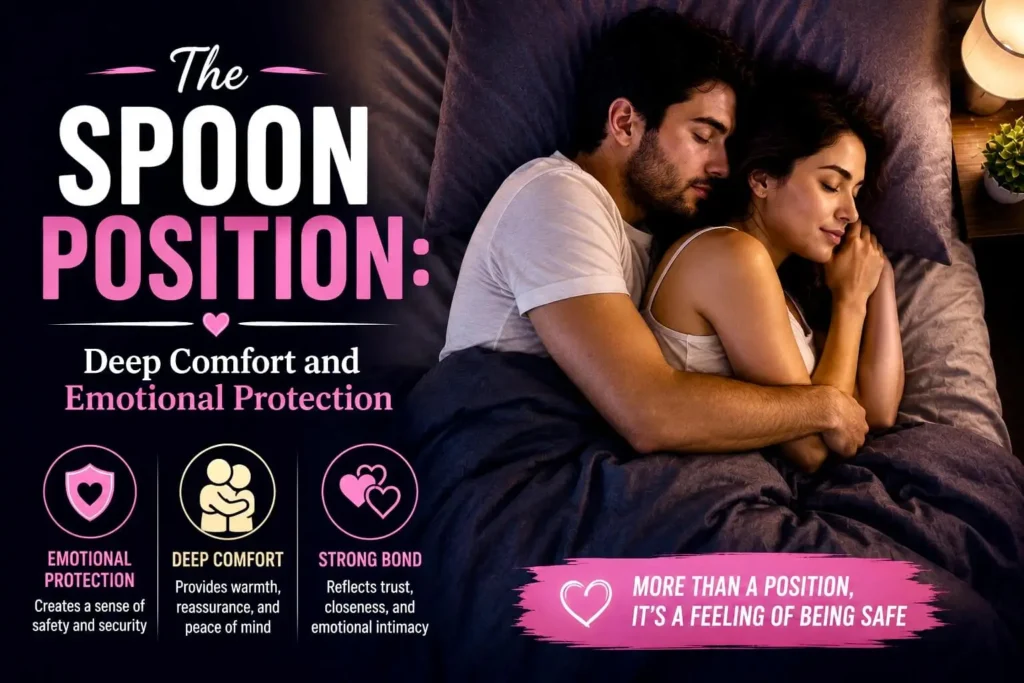
One of the most common and romantic sleeping positions is spooning.
In this position, one partner wraps their body around the other from behind. Relationship psychology often connects spooning with emotional closeness, protection, affection, and trust.
Usually, the person holding from behind is seen as protective or emotionally supportive, while the partner in front may feel emotionally safe and comforted.
This sleeping position often appears in relationships where physical affection is important. Couples who sleep this way usually enjoy emotional intimacy and reassurance.
But psychology experts also say spooning is not always about dominance or control. Sometimes it simply reflects emotional warmth and a desire to stay connected during vulnerable moments like sleep.
Interestingly, couples who spoon every night may slowly shift into other positions later because of comfort or body heat. That does not necessarily mean emotional distance.
The real meaning often depends on overall relationship energy, not only one sleeping habit.
2. Back-to-Back Sleeping: Distance or Healthy Independence?
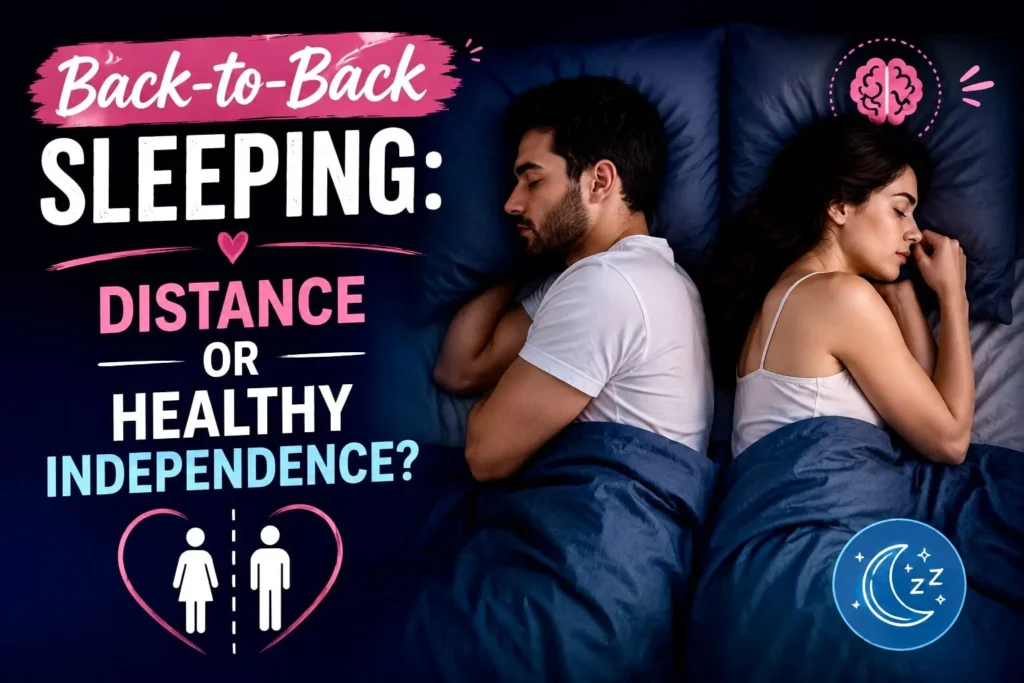
Many people panic when couples sleep back-to-back.
At first glance, it may look emotionally cold or distant. But relationship psychology says this sleeping position is often misunderstood.
In reality, sleeping back-to-back can actually show emotional security and healthy independence.
Some couples simply sleep better with personal space while still feeling emotionally connected. If both partners are relaxed and comfortable, this position may reflect trust and maturity rather than relationship problems.
However, there is one important detail psychologists often notice: Are the bodies touching slightly or completely apart?
If there is small physical contact — like touching backs, legs, or feet — it often shows emotional connection still exists even with space.
But if both partners sleep far away without physical contact for long periods, especially during stressful relationship phases, it could sometimes reflect emotional disconnection or unresolved tension. Body language during sleep often mirrors emotional energy from daily life.
3. Face-to-Face Sleeping: Strong Emotional Connection
Couples who sleep face-to-face often share strong emotional intimacy.
This position usually reflects deep emotional attention, attraction, and communication. Partners naturally face each other because they enjoy emotional closeness and connection.
If the couple sleeps face-to-face while touching or holding each other, relationship psychology often connects it with passion, romance, and emotional bonding.
New couples frequently sleep this way during the early stages of attraction because emotions and excitement feel very intense.
Interestingly, body language experts believe this position may show that both people emotionally “focus” on each other even during sleep.
However, sleeping face-to-face all night is not always comfortable physically. That is why many couples begin this way before shifting positions later during sleep.
The important thing is emotional energy.
If partners naturally move toward each other during sleep, it often suggests emotional comfort, affection, and subconscious attraction.
Sometimes the body says things the mouth never does.
4. Sleeping Far Apart: What Does It Really Mean?
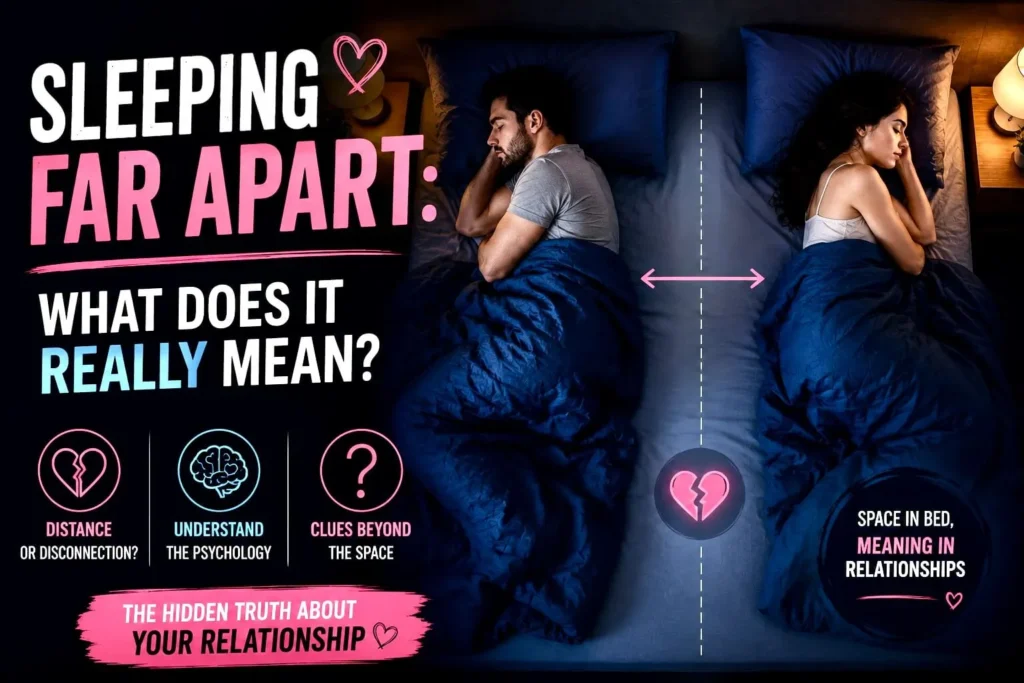
Many couples worry when they notice large distance between them while sleeping.
But the meaning is not always negative.
Some people naturally need personal sleeping space because of body temperature, sleep habits, or comfort preferences. It does not always mean emotional problems.
However, relationship psychology suggests context matters.
If emotional intimacy feels strong during the day but sleeping distance exists at night, it may simply reflect comfort needs.
But if the relationship already feels emotionally disconnected, constant physical distance during sleep can sometimes reflect emotional separation too.
Body language experts often say emotional tension quietly appears in subconscious behavior.
Couples experiencing stress, arguments, resentment, or emotional exhaustion may naturally create more physical distance without realizing it.
Still, sleeping positions alone should never be treated as “proof” of relationship success or failure.
The healthiest approach is looking at the full emotional picture, not only sleep habits.
5. The Leg Touch: Small Contact, Big Emotional Meaning
Some couples barely touch while sleeping except for one small thing — their legs or feet remain connected.
Surprisingly, relationship psychology sees this as a very positive sign.
Even minimal physical contact during sleep can show emotional attachment and subconscious connection.
Psychologists often believe this small touch represents emotional reassurance without needing constant physical closeness.
It quietly says:
“I’m here.”
Couples who sleep independently but still touch feet or legs may actually have very balanced relationships. They respect personal space while maintaining emotional connection.
This sleeping habit is especially common in long-term healthy relationships where both partners feel emotionally secure.
Interestingly, many people do this subconsciously without realizing it.
The body naturally searches for comfort and emotional familiarity during sleep.
Sometimes one small touch can reveal more emotional closeness than dramatic physical affection.
6. The Hugging Position: Romance, Security, and Emotional Warmth
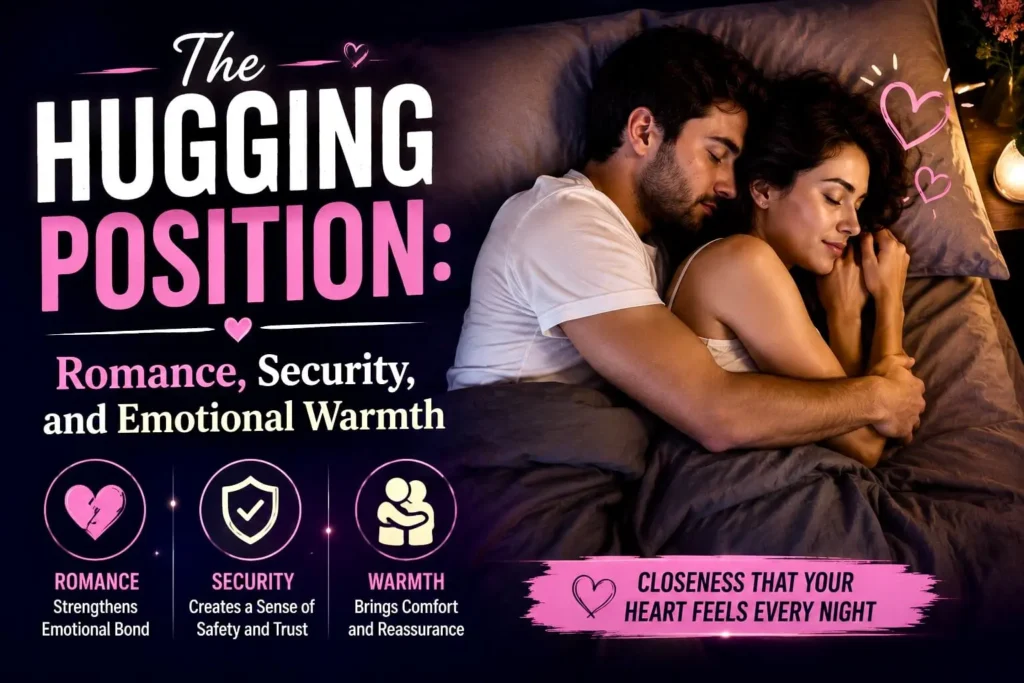
Some couples fall asleep while hugging tightly.
This sleeping position often reflects emotional closeness, comfort, affection, and deep emotional bonding. Relationship psychology connects sleeping while hugging with emotional reassurance and romantic attachment.
In many cases, couples who sleep this way enjoy emotional intimacy outside the bedroom too. Physical touch often feels important to them.
New relationships frequently show this sleeping habit because attraction feels stronger during the honeymoon phase. Partners naturally want constant closeness.
However, hugging while sleeping does not always mean a “perfect” relationship. Sometimes one partner may seek emotional comfort during stressful times.
Body language experts often say this position reflects a desire for emotional safety.
The message behind it may quietly be:
“I feel secure when you are close.”
Even if couples cannot stay in this position all night because of comfort, starting sleep this way often shows emotional warmth and connection.
7. The Chase Position: Hidden Emotional Dynamics
The chase position happens when one partner appears to “follow” the other side of the bed.
For example, one person moves slightly away while the other naturally moves closer.
At first, many people assume this means emotional imbalance. But psychology says the meaning can vary.
Sometimes the partner moving closer simply enjoys physical affection more.
Other times, the partner creating space may need comfort, better sleep positioning, or personal space.
However, in some relationships, repeated chasing behavior may reflect emotional needs.
One person may subconsciously seek reassurance, connection, or closeness.
Psychologists often suggest paying attention to relationship patterns outside sleep too.
Ask yourself:
- Does one partner often seek more attention?
- Is emotional effort balanced?
- Does closeness feel mutual?
Sleeping habits may sometimes mirror relationship energy in quiet ways.
8. The Loose Spoon: Healthy Love Without Overdependence
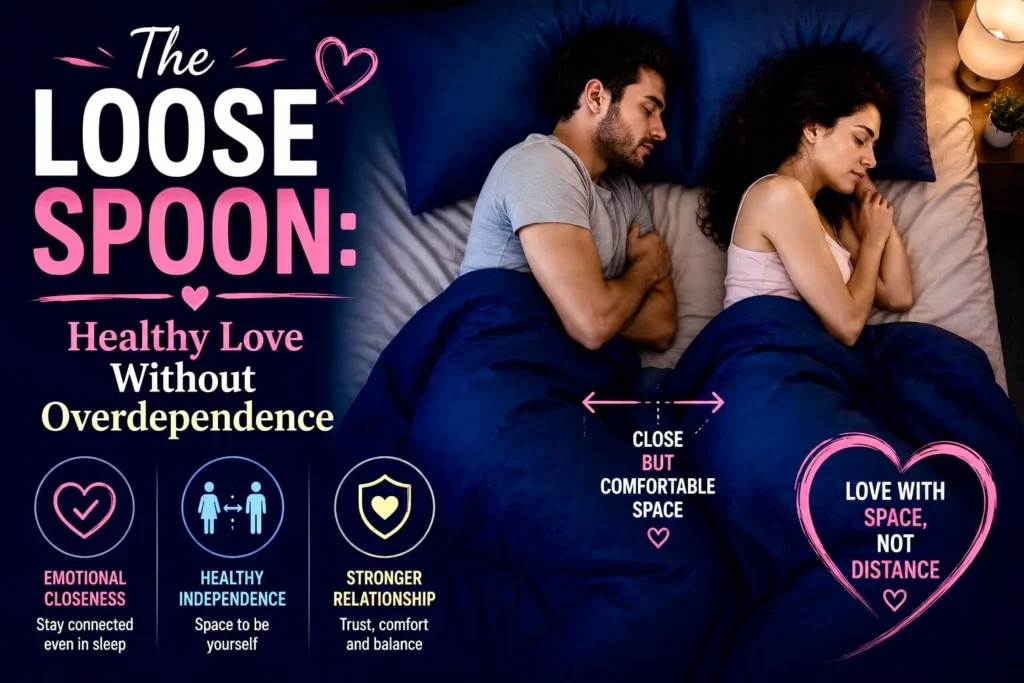
The loose spoon position is similar to spooning — but with a little space between partners. Many relationship experts actually see this as one of the healthiest sleeping positions.
Why?
Because it often reflects emotional closeness combined with healthy independence. Couples who sleep this way usually feel secure enough to maintain personal comfort while still staying emotionally connected.
This position is very common in long-term relationships. During early romance, couples often sleep tightly together. But over time, comfort and routine naturally change.
The good news?
Less physical closeness during sleep does not automatically mean less love. In fact, loose spooning often shows maturity and trust. The emotional message becomes:
“I love being close to you, but we both feel comfortable being ourselves too.” Healthy relationships often balance intimacy with independence.
9. The Starfish Sleeper: Need for Space or Personality Difference?
Sometimes one partner spreads across the bed like they own the whole mattress. This is often called the “starfish” sleeping position.
Funny? Yes.
But relationship psychology says it may reveal interesting personality traits too. In some cases, one partner naturally takes more space because of sleeping habits, body movement, or comfort needs.
However, psychology sometimes connects this behavior with dominance, confidence, or strong independence. The important question is:
Does the other partner feel respected?
If one person constantly sacrifices sleep comfort, resentment can slowly build. Healthy relationships involve balance — even in bed space. At the same time, many couples simply laugh about this habit and adjust naturally over time.
The key is communication. Small sleeping habits only become problems when emotional needs stop feeling respected.
10. Sleeping on Someone’s Chest: Deep Trust and Emotional Safety

One of the sweetest sleeping positions is resting your head on your partner’s chest. Psychologists often associate this position with emotional trust, affection, comfort, and protection.
It frequently appears in emotionally connected relationships where one partner feels deeply safe with the other. The heartbeat itself may create subconscious comfort.
Science suggests steady rhythms like breathing and heartbeat can naturally calm anxiety and stress. That may explain why this sleeping position feels emotionally comforting. Many couples also experience this after emotional moments, difficult days, or meaningful conversations.
It can quietly symbolize:
“I feel safe with you.”
This position is often romantic, emotionally intimate, and deeply reassuring. But like all sleeping psychology, context matters. Real relationship strength comes from emotional effort during daily life too.
11. What Sleeping Positions Say About Relationship Psychology
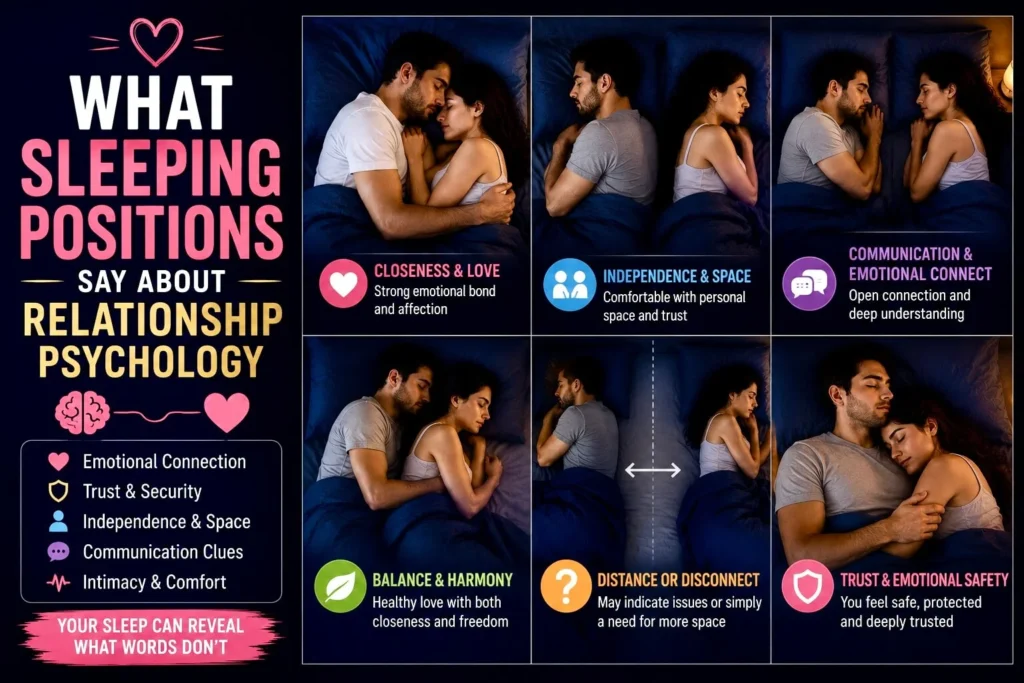
So, what do sleeping positions really mean?
The truth is, couples sleeping positions psychology is more about emotional patterns than strict rules.
No sleeping position automatically means:
- Happy relationship
- Bad relationship
Body language during sleep simply offers clues.
Healthy relationship signs often include:
- Natural comfort
- Emotional safety
- Respect for personal space
- Mutual affection
- Relaxed body language
Meanwhile, relationship tension may sometimes appear through:
- Sudden physical distance
- Turning away after conflict
- Avoiding physical contact
- Restless sleep energy
Still, one bad night means nothing. Stress, work pressure, heat, tiredness, or health can all influence sleeping habits. Psychology becomes helpful only when patterns stay consistent over time. The body often reflects emotions quietly. But relationships are always bigger than one sleeping position.
12. Can Sleeping Positions Change Relationship Energy?
Yes — surprisingly, they sometimes can. Physical closeness affects emotional bonding. Research in body language psychology suggests affectionate touch can increase feelings of comfort, safety, and emotional connection.
Simple habits matter:
- Holding hands before sleep
- Small physical touch
- Hugging goodnight
- Sleeping closer occasionally
Tiny emotional rituals often strengthen connection. But forcing physical closeness never works. Healthy affection feels natural.
If emotional distance exists, honest conversations matter more than changing sleeping positions. Relationships improve through communication, trust, emotional safety, and understanding. Still, many couples notice something interesting:
The more emotionally connected they feel during the day, the closer they naturally sleep at night. Sometimes the body quietly reflects what the heart already feels.
Final Thoughts: Your Sleeping Position May Reveal More Than You Think
The psychology of couples sleeping positions can feel fascinating because it gives small clues about emotional connection, trust, comfort, and intimacy.
But remember this:
No sleeping position alone can define your relationship. Some deeply connected couples sleep apart. Some emotionally distant couples sleep close. What matters most is how you treat each other during real life — communication, respect, emotional effort, and trust.
Still, understanding body language and relationship psychology can help you notice emotional patterns you may have never seen before. Sometimes, love quietly shows itself in small things — a foot touch, a hug before sleep, or simply turning toward someone without even realizing it.
Want to Understand Male Psychology on a Deeper Level?
If you want to understand what secretly makes a man feel emotionally connected, think about you more, and build stronger attraction, many women are exploring His Secret Obsession. It explains hidden emotional triggers and relationship psychology that can help deepen connection naturally.
Sometimes, small psychology shifts can completely change how a relationship feels
Frequently Asked Questions
Popular Relationship Psychology Guides
- How to Make Him Text You First: 15 Smart Psychology Tricks
- What Is the Biggest Red Flag in a Guy? Signs Never to Ignore
- What Causes Hypersexuality in Males? The Hidden Psychology
- What Makes a Man Sexually Addicted to a Woman? (Psychology)
- How To Keep Him Attracted Even After Marriage (Psychology)
- How to Trigger a Man’s Obsession (Psychology Actually Works)
- What Is the 3-6-9 Dating Rule? Psychology of Honeymoon
- How to Make Him Addicted to You (Psychology That Works)
Pingback: 17 Signs He Misses You During No Contact (Psychology)
Pingback: How to Rebuild Attraction When He Loses Interest
Pingback: How to Feel Confident Around Men: 11 Psychology Tricks