
Discover What Causes Hypersexuality in Males? The Hidden Psychological & Brain Reasons Most Men Never Talk About
Have you ever wondered why some men think about sex constantly… even when they don’t want to? Why does one man control his urges easily while another feels trapped in endless fantasies, porn, texting, hookups, or obsessive thoughts? The truth is shocking:
Hypersexuality in men is not always about “high desire.” Sometimes it’s connected to stress, loneliness, emotional pain, brain chemistry, trauma, dopamine addiction, or psychological emptiness. And in today’s world of social media, instant gratification, dating apps, and unlimited adult content… male hypersexuality is becoming more common than ever.
This article will explain:
- What hypersexuality really means
- The hidden emotional and brain-related causes
- Signs most men ignore
- Psychological triggers
- Effects on relationships and mental health
- Natural ways to regain control
If you searched “what causes hypersexuality in males”, this guide will help you understand the deeper truth behind male sexual obsession and compulsive behavior.
What Is Hypersexuality in Males?
Hypersexuality means an unusually intense focus on sexual thoughts, fantasies, urges, or behaviors that become difficult to control.
Some people also call it:
- Compulsive sexual behavior
- Sexual addiction
- Excessive sexual urges
- Uncontrollable libido
But here’s the important part: Having a high sex drive does NOT automatically mean someone is hypersexual. A healthy sexual desire is normal.
Hypersexuality becomes a problem when:
- Sexual thoughts control daily life
- A man cannot stop even when he wants to
- It affects relationships, work, sleep, emotions, or mental peace
- He uses sex or porn to escape emotional pain
Why Hypersexuality in Men Is Increasing Today
Modern digital life constantly stimulates the male brain. Think about it:
- Instagram models
- Dating apps
- Porn websites
- Sexualized advertising
- Dopamine-based scrolling
- Lonely lifestyles
- Emotional disconnection
The male brain is exposed to more sexual triggers today than at any point in human history. This creates overstimulation. Over time, the brain can become addicted to excitement, novelty, fantasy, and dopamine spikes. That’s one major reason why many men feel their sexual thoughts becoming stronger and harder to control.
1. Dopamine Addiction: The Biggest Hidden Cause
The brain chemical dopamine plays a huge role in hypersexuality. Dopamine is the “reward chemical” connected to:
- Pleasure
- Motivation
- Excitement
- Anticipation
Every time a man watches porn, fantasizes, sexts, flirts, or experiences sexual excitement, dopamine rises. Over time, the brain may start craving stronger stimulation.
This creates a cycle:
- Sexual urge appears
- Dopamine spike happens
- Temporary pleasure comes
- Brain wants more again
Eventually, normal activities stop feeling exciting. The brain becomes dependent on sexual stimulation for emotional relief. This is why many men say:
“I know it’s affecting me… but I still can’t stop.”
2. Loneliness and Emotional Emptiness
One of the most overlooked causes of male hypersexuality is emotional loneliness. Many men never openly discuss:
- Rejection
- Emotional neglect
- Lack of affection
- Feeling unwanted
- Childhood emotional distance
- Relationship pain
Instead of processing emotions, some men unconsciously use sexual stimulation as emotional escape. Sexual fantasy temporarily fills emotional emptiness.
For a short time, it creates:
- Excitement
- Validation
- Connection
- Escape from stress
But after the dopamine fades, the loneliness often returns stronger. That’s why compulsive sexual behavior sometimes has deeper emotional roots.
3. Pornography Overstimulation
Porn addiction is one of the strongest modern triggers of hypersexuality in males. The human brain was never designed for endless novelty. But online porn provides:
- Unlimited new faces
- Endless fantasies
- Constant novelty
- Instant access
- Artificial stimulation
This overloads the reward system. Over time:
- Normal attraction may weaken
- Real intimacy may feel less exciting
- Sexual thoughts increase
- Self-control decreases
Many men notice:
- Constant cravings
- Escalating fantasies
- Difficulty focusing
- Emotional numbness
- Relationship dissatisfaction
The brain begins chasing stimulation instead of genuine connection.
4. Stress and Anxiety

This surprises many people: Stress can actually increase hypersexual behavior. Why?
Because some men use sexual activity to regulate emotions. During stress, the brain seeks relief. Sexual stimulation temporarily reduces:
- Anxiety
- Mental pressure
- Emotional discomfort
- Restlessness
This creates a coping mechanism. Instead of dealing with stress directly, the brain learns:
“Sexual stimulation = temporary emotional relief.”
Eventually, the habit becomes automatic.
5. Childhood Trauma or Emotional Wounds
Many psychological studies connect compulsive sexual behavior with unresolved emotional trauma. This can include:
- Emotional neglect
- Abandonment
- Childhood instability
- Abuse
- Bullying
- Shame around emotions
- Toxic family environments
Not every hypersexual man experienced trauma. But for some men, sexual behavior becomes a way to:
- Feel control
- Feel validated
- Escape pain
- Avoid emotional vulnerability
Sometimes the sexual behavior is not truly about pleasure. It is about emotional survival.
6. Depression and Emotional Numbness
Depression affects men differently than many people realize. Some depressed men do not appear sad externally. Instead, they may experience:
- Emotional emptiness
- Loss of meaning
- Numbness
- Internal frustration
Sexual stimulation can become one of the few things that still feels emotionally intense. This can lead to compulsive behavior. Ironically:
- Hypersexuality can temporarily hide depression
- But later worsen guilt, shame, and emotional exhaustion
7. Hormonal Imbalances
In some cases, biological factors contribute to hypersexuality. This may include:
- High testosterone levels
- Hormonal fluctuations
- Certain neurological conditions
- Brain chemistry changes
However, hormones alone rarely explain severe compulsive sexual behavior. Usually, psychological and environmental factors also play a major role.
8. Social Media and Constant Sexual Triggers
Modern apps are designed to keep attention. And sexual content gets attention faster than almost anything else. Every scroll can trigger:
- Attraction
- Curiosity
- Fantasy
- Dopamine release
Over time, the brain stays in a constant state of stimulation. This is why many men today feel:
- Mentally distracted
- Constantly triggered
- Easily tempted
- Unable to focus
The digital environment itself is changing male psychology.
9. Low Self-Esteem and Validation Seeking
Some men use sexual attention to feel valuable. Compliments, flirting, matches, or sexual responses can create temporary confidence boosts. If a man internally feels:
- Unworthy
- Unattractive
- Insecure
- Emotionally unseen
Then sexual attention may become emotionally addictive. It temporarily gives:
- Ego validation
- Confidence
- Emotional excitement
But because the confidence is external, it fades quickly. Then the brain seeks more validation again.
Signs of Hypersexuality in Men
Not every high libido is unhealthy. But these signs may indicate compulsive behavior:
- Constant sexual thoughts
- Difficulty controlling urges
- Excessive porn use
- Obsessive sexting or flirting
- Risky sexual behavior
- Using sex to escape stress
- Feeling guilt afterward
- Neglecting responsibilities
- Relationship conflicts
- Emotional emptiness after pleasure
If these behaviors interfere with peace, focus, or relationships, deeper self-awareness may help.
The Difference Between Healthy Desire and Hypersexuality
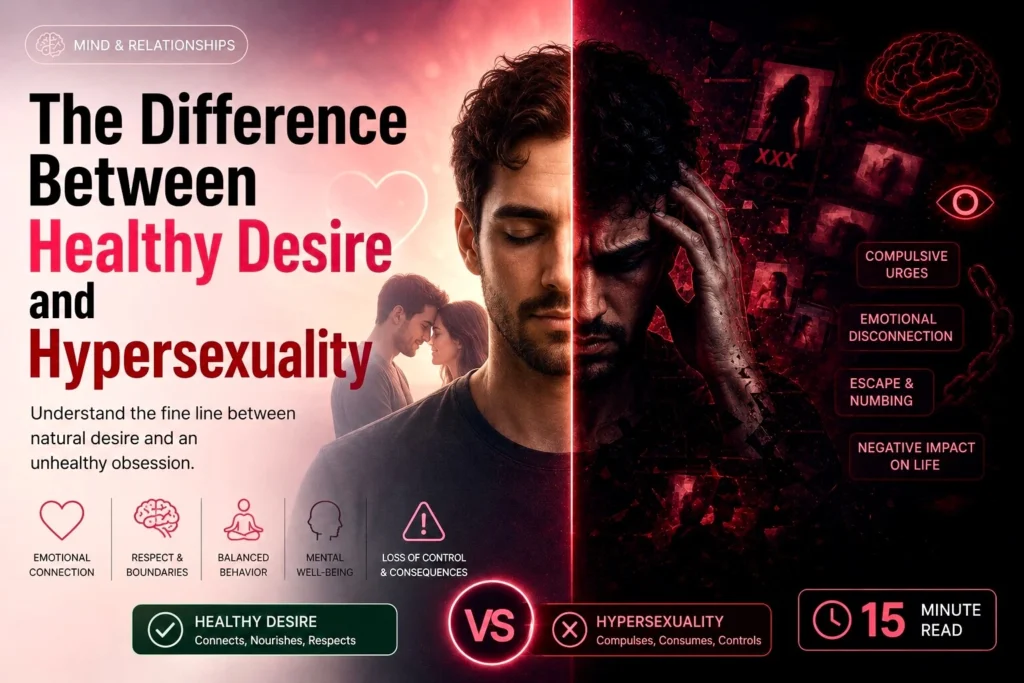
Healthy sexual desire:
- Feels balanced
- Does not control life
- Exists alongside emotional connection
- Does not create shame or obsession
Hypersexuality often feels:
- Compulsive
- Emotionally driven
- Difficult to control
- Mentally exhausting
The key difference is not how often someone thinks about sex. The real question is:
“Does the behavior control the person?”
How Hypersexuality Affects Relationships
Many men hide these struggles from partners. But over time, compulsive sexual behavior can damage intimacy. Common effects include:
- Emotional distance
- Trust issues
- Unrealistic expectations
- Reduced emotional connection
- Secretive behavior
- Increased guilt and shame
Sometimes the partner feels:
- Unwanted
- Insecure
- Emotionally disconnected
Real intimacy requires emotional presence, not just stimulation.
Why Many Men Never Talk About It
Society often tells men:
- “Men always want sex.”
- “High desire is masculine.”
- “Strong urges are normal.”
Because of this, many men silently struggle without asking for help. Some fear:
- Judgment
- Embarrassment
- Shame
- Weakness
But understanding the deeper emotional and neurological causes can reduce self-hatred and increase self-awareness.
Can Hypersexuality Be Treated?
Yes. Many men regain balance when they address the root causes. Treatment may include:
- Therapy
- Stress management
- Reducing porn consumption
- Emotional healing
- Healthier routines
- Dopamine regulation
- Exercise and mindfulness
- Better emotional connection
The goal is not to “eliminate sexuality.” The goal is restoring balance and control.
How to Reduce Hypersexual Thoughts Naturally

1. Reduce Dopamine Overload
Limit excessive:
- Porn
- Endless scrolling
- Sexual content
- Constant stimulation
This helps the brain reset sensitivity.
2. Exercise Regularly
Physical activity helps regulate:
- Stress
- Dopamine
- Testosterone balance
- Mental clarity
Exercise also reduces compulsive urges in many men.
3. Improve Emotional Awareness
Instead of immediately escaping into stimulation, ask:
- What am I actually feeling?
- Stress?
- Loneliness?
- Anxiety?
- Rejection?
- Boredom?
Sometimes awareness itself reduces compulsive behavior.
4. Build Real Human Connection
Emotional connection reduces emotional emptiness.
Healthy conversations, friendships, purpose, and intimacy matter more than endless stimulation.
5. Create Purpose Beyond Pleasure
Men with strong life direction often experience better self-control.
Purpose changes the brain’s reward system.
When life has meaning:
- Dopamine becomes healthier
- Focus improves
- Obsession weakens
The Psychological Truth Most People Ignore
Hypersexuality is not always about lust. Sometimes it is:
- Emotional pain
- Dopamine imbalance
- Loneliness
- Escapism
- Validation seeking
- Unhealed emotional wounds
That is why judging someone rarely solves the problem. Understanding the root cause matters more.
Final Thoughts

If you searched: “What causes hypersexuality in males?” Now you know the answer is deeper than most people think. Hypersexuality can involve:
- Brain chemistry
- Emotional struggles
- Modern digital overstimulation
- Stress
- Trauma
- Loneliness
- Dopamine addiction
And in many cases, men are not simply “too sexual.” They are emotionally overwhelmed, overstimulated, disconnected, or trying to escape internal emptiness.
The good news? The brain can heal. With awareness, healthier habits, emotional healing, and balance, many men regain control and build a healthier relationship with desire, intimacy, and themselves. Because real strength is not suppressing emotions. Real strength is understanding them.
If you want to understand the deeper psychological triggers that make a man emotionally attached, constantly think about you, and crave your presence, many women are now exploring the powerful psychology techniques inside
Because sometimes… understanding the male mind changes the entire relationship.
Frequently Asked Questions
You might also find these guides helpful:
- How To Keep Him Attracted Even After Marriage (Psychology)
- How to Trigger a Man’s Obsession (Psychology Actually Works)
- What Is the 3-6-9 Dating Rule? Psychology of Honeymoon
- How to Make Him Addicted to You (Psychology That Works)
- How to Make a Man Crave You Emotionally
- How To Trigger Hero Instinct In A Man
- How to Make Him Obsessed With You – Psychology Tips
Pingback: How to Make Him Text You First: 15 Smart Psychology Tricks
Pingback: Psychology of Couples Sleeping Positions: What Says It
Pingback: How to Know If a Man Is Testing You: 9 Hidden Signs
Pingback: Situationship Meaning: 15 Signs You're Stuck in One
Pingback: How to Feel Confident Around Men: 11 Psychology Tricks
Pingback: How to Rebuild Attraction When He Loses Interest