Silent treatment psychology explained: discover why people ignore you, what their silence means, how it affects you, and how to respond with self-respect.
Have you ever sent a message, waited for hours—or even days—and received nothing but silence? No reply. No explanation. No closure. That silence can hurt more than harsh words because your mind keeps searching for answers that never come.
This is where silent treatment psychology becomes important. People often assume that being ignored always means someone has stopped caring. In reality, psychology tells a more complex story. Sometimes silence is a way to avoid conflict, sometimes it is a form of emotional control, and sometimes it reflects fear, stress, or emotional immaturity.
The difficult part is that silence leaves room for imagination. Instead of knowing the truth, your brain starts creating stories:
- Did I do something wrong?
- Have they lost interest?
- Are they trying to punish me?
- Should I keep texting or just walk away?
Psychologists explain that uncertainty creates more emotional pain than receiving a direct answer. Our brains naturally seek closure, and when none is available, we continue thinking about the situation over and over again.
Understanding the psychology behind the silent treatment doesn’t just help you understand the other person—it helps you protect your own emotional well-being. Once you recognize why people withdraw or ignore others, you stop blaming yourself for everything that goes wrong.
In this guide, you’ll learn why people use silence, what it usually means, when it’s emotional abuse, and how to respond in a way that protects your confidence instead of damaging it.
What Is Silent Treatment Psychology?
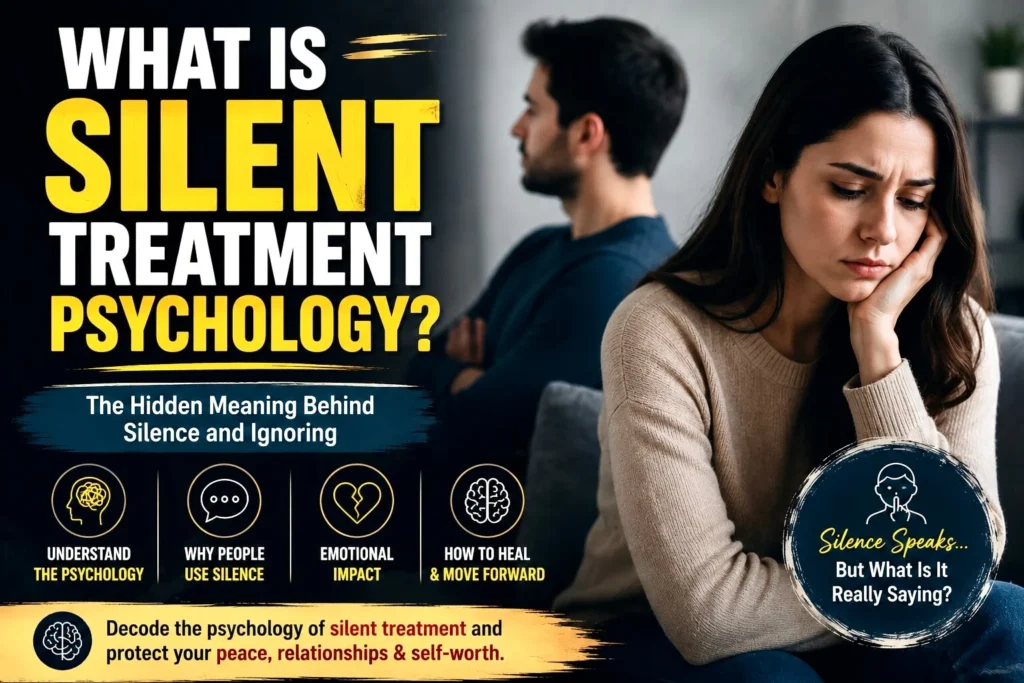
Silent treatment psychology refers to the emotional and psychological reasons someone intentionally avoids communicating with another person. Instead of expressing their feelings openly, they choose silence.
This silence may include:
- Ignoring text messages
- Refusing eye contact
- Giving one-word replies
- Pretending the other person doesn’t exist
- Avoiding conversations completely
Although silence itself isn’t always harmful, the intention behind it matters. For example, someone may genuinely need a few hours alone after an argument to calm down. That is healthy emotional regulation.
However, when silence is used to make another person feel guilty, anxious, rejected, or desperate, it becomes emotionally unhealthy and can even become a form of emotional manipulation.
Psychologists often describe the silent treatment as a passive form of communication. Instead of solving problems with words, one person sends a message through absence.
The hidden message often sounds like this: “You’ll understand how I feel when I stop talking to you.” Unfortunately, this rarely solves problems. Instead, it creates confusion, insecurity, and emotional distance.
Why Does Being Ignored Hurt So Much?

Many people ask: “Why can’t I stop thinking about someone who ignores me?” The answer lies inside your brain.
Humans are naturally wired for social connection. For thousands of years, belonging to a group increased our chances of survival. Because of this, our brains still react strongly when we feel excluded.
Research has shown that social rejection activates some of the same brain regions involved in physical pain.
That’s why phrases like: “It felt like my heart broke.” or “Being ignored hurt more than the argument itself.” are not just emotional expressions—they reflect real psychological experiences.
When someone suddenly becomes silent, your brain immediately starts searching for answers. Instead of accepting uncertainty, it asks questions such as:
- What happened?
- Did I upset them?
- Should I apologize?
- Should I message again?
This endless search for explanations creates anxiety. Ironically, the less information you receive, the more your mind becomes emotionally attached to finding an answer.
7 Psychology-Backed Reasons People Ignore You
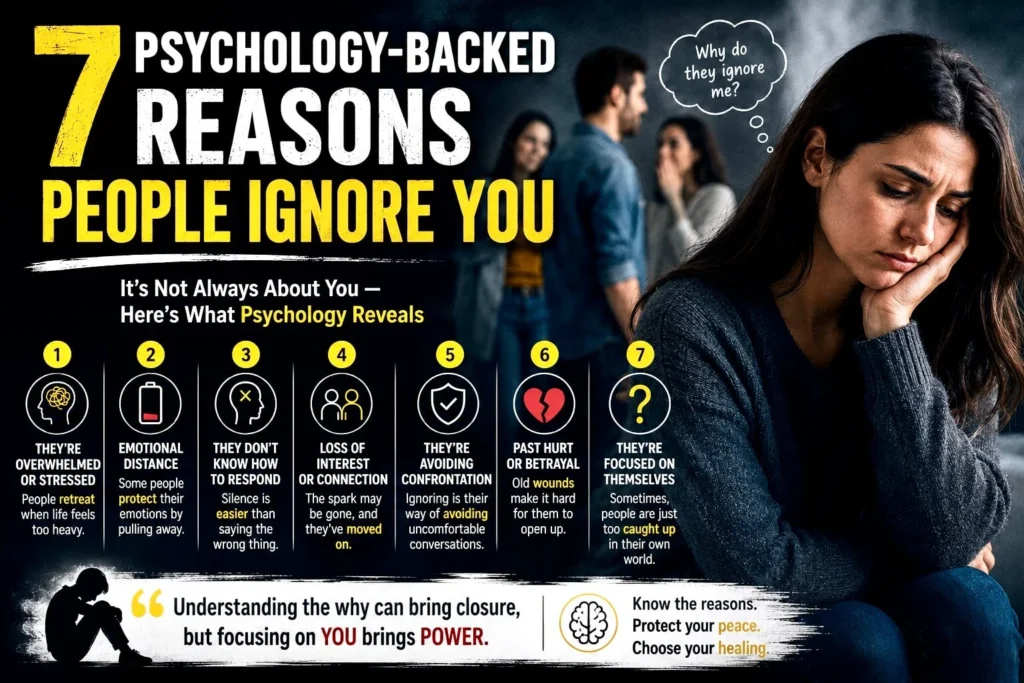
Not everyone uses silence for the same reason. Understanding their motivation helps you respond wisely instead of emotionally.
1. They Want to Avoid Conflict
Some people never learned how to express uncomfortable emotions. Instead of saying, “I’m upset.” or “I need time to think.” they simply disappear.
Psychologists call this conflict avoidance. For them, silence feels easier than an uncomfortable conversation. Unfortunately, avoiding problems rarely solves them.
2. They Feel Emotionally Overwhelmed
Sometimes people don’t ignore you because they don’t care. They ignore everyone. Stress, anxiety, burnout, work pressure, family problems, or emotional exhaustion can cause someone to withdraw temporarily.
This type of silence usually isn’t meant to hurt anyone. The difference is that emotionally overwhelmed people often return later with an explanation.
3. They’re Trying to Regain Control
Silence can also become a way of gaining power. Some people notice that when they stop replying, the other person begins chasing them.
More texts. More calls. More apologies. That attention makes them feel emotionally powerful.
In psychology, this is considered a controlling behavior because silence is being used to influence another person’s emotions rather than communicate honestly.
Healthy relationships never require emotional games.
4. They’re Punishing You
Instead of discussing what upset them, they use silence as punishment. The goal isn’t solving the disagreement. The goal is making you feel guilty.
Common signs include:
- Ignoring only you
- Talking normally with everyone else
- Refusing every attempt to communicate
- Acting as though nothing happened later
Over time, this pattern damages trust and emotional safety.
5. They Have an Avoidant Attachment Style
Attachment psychology explains that some people become uncomfortable when relationships become emotionally close. As intimacy grows, they instinctively create distance.
Silence becomes their way of reducing emotional pressure. This doesn’t necessarily mean they don’t care. It often means they struggle with vulnerability.
Understanding attachment styles helps explain behaviors—but it doesn’t excuse repeated emotional neglect.
6. They’ve Lost Interest
Sometimes the simplest explanation is also the hardest to accept. People occasionally stop communicating because their feelings have changed.
Rather than having an honest conversation, they slowly disappear. This is painful, but knowing the truth is healthier than spending months trying to decode silence that already has an answer.
7. They Expect You to Read Their Mind
Some people believe: “If you really loved me, you’d know why I’m upset.” Instead of explaining their feelings, they wait for you to figure everything out.
Unfortunately, relationships don’t work this way. Healthy love depends on communication—not mind reading.
Is Silent Treatment Emotional Abuse?

This is one of the most searched questions online. The answer is: Sometimes yes—and sometimes no.
Silence becomes emotionally abusive when it is repeatedly used to:
- Control another person’s behavior
- Create fear or anxiety
- Force apologies
- Punish someone emotionally
- Make them feel worthless or invisible
However, taking a short break to calm down after an argument is completely different. Healthy boundaries sound like this: “I’m upset right now. I need some time to think. Let’s talk tonight.”
Unhealthy silence sounds like this: No explanation. No response. Days of complete emotional withdrawal.
The difference isn’t silence itself. The difference is communication and intention.
Signs Someone Is Using Silence to Manipulate You
Watch for these warning signs:
- They ignore you but stay active on social media.
- They suddenly become warm again once you apologize.
- They repeatedly use silence after disagreements.
- They expect you to chase them every time.
- They never explain their behavior afterward.
- They make you feel guilty for wanting basic communication.
If this becomes a repeated pattern, the relationship may be built on emotional control instead of mutual respect.
How the Silent Treatment Affects Your Mental Health
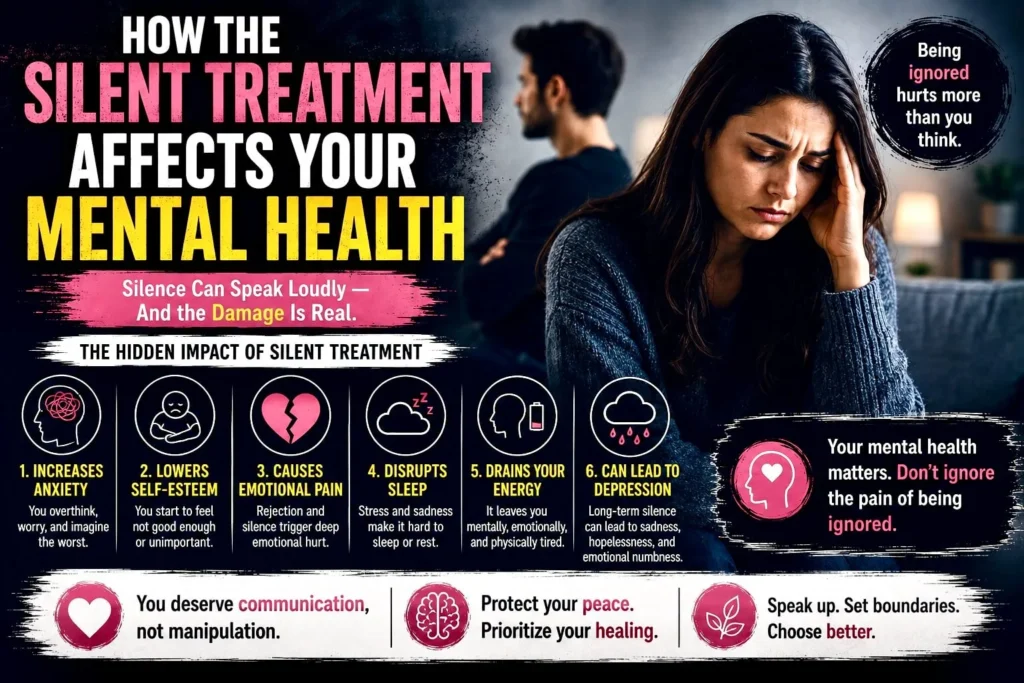
When someone suddenly stops talking to you, your brain doesn’t simply “move on.” Instead, it begins searching for answers. Every unread message, every ignored call, and every moment of silence can trigger overthinking.
You may find yourself replaying old conversations and wondering if you said something wrong. This constant mental loop can increase stress, anxiety, and self-doubt.
Psychologists explain that uncertainty is emotionally exhausting because the human brain naturally seeks closure. When closure never comes, the mind keeps searching for it.
Over time, repeated silent treatment may lead to:
- Lower self-esteem
- Anxiety and overthinking
- Emotional exhaustion
- Loss of confidence
- Fear of expressing feelings
- Difficulty trusting future partners
This is why prolonged silence often hurts more than an honest disagreement. A difficult conversation may sting for a moment, but silence leaves unanswered questions that linger for days, weeks, or even months.
How to Respond to Silent Treatment (Without Losing Your Self-Respect)
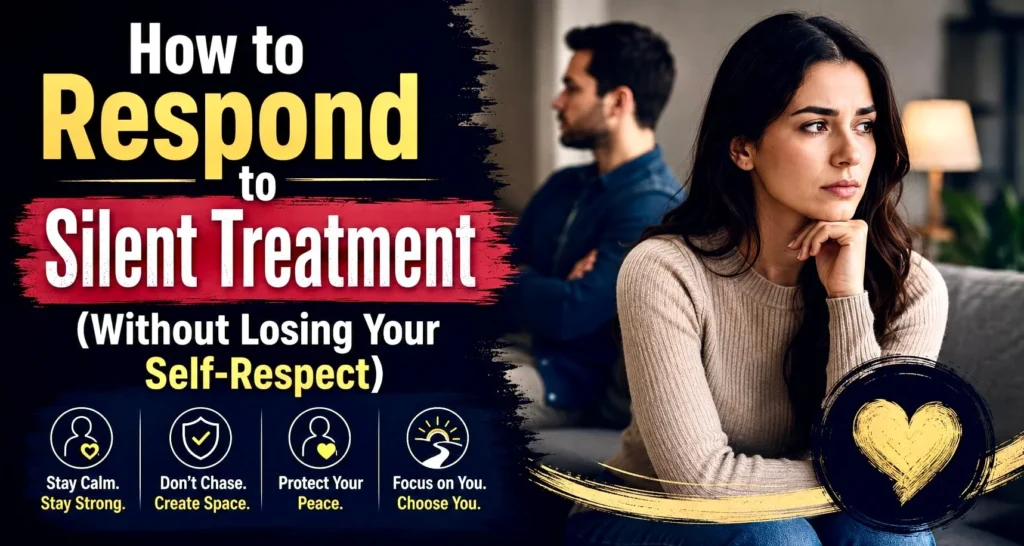
One of the biggest mistakes people make is reacting emotionally. They send ten messages, apologize repeatedly, or beg for a response. Unfortunately, this rarely improves the situation. Instead, try these healthier approaches.
1. Stay Calm Before Reacting
Your emotions will naturally push you to seek immediate answers. Take a deep breath and pause. Not every period of silence is rejection. Sometimes people genuinely need space. Give yourself time before assuming the worst.
2. Communicate Clearly Once
Instead of sending multiple messages, send one calm and respectful message. For example: “I’ve noticed we haven’t been talking. If you need some space, I understand. Whenever you’re ready to talk respectfully, I’m here.”
This communicates maturity without chasing.
3. Don’t Beg for Attention
Healthy relationships never require you to convince someone to speak to you.
If someone repeatedly ignores your attempts to communicate, continuing to chase them usually lowers your confidence rather than strengthening the relationship.
Your self-respect should never depend on someone else’s reply.
4. Focus on Your Own Life
While waiting for someone to respond, it’s easy to put your entire life on hold. Instead:
- Spend time with friends and family.
- Exercise regularly.
- Continue working toward your goals.
- Read books or learn new skills.
- Practice mindfulness or meditation.
Ironically, emotionally healthy people become more attractive because they don’t lose themselves while waiting for someone else.
5. Set Healthy Boundaries
If silent treatment becomes a repeated pattern, it’s important to communicate your expectations.
You might say:
“I understand needing space, but disappearing without communication isn’t healthy for me. I’d rather talk openly when we’re both ready.”
Healthy people respect healthy boundaries.
Mistakes to Avoid
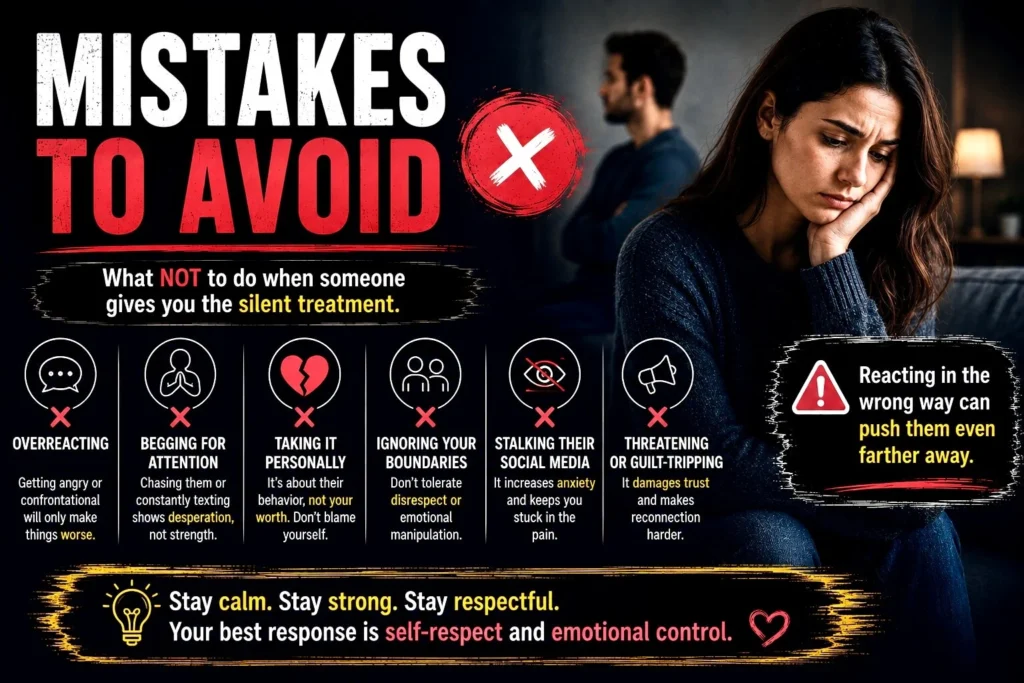
When someone ignores you, avoid these common mistakes.
Sending repeated messages
One thoughtful message is enough. Multiple texts usually increase emotional dependence rather than solving the problem.
Constantly checking social media
Watching every story, every online status, or every new post only fuels anxiety. Silence doesn’t become easier by monitoring someone every hour.
Assuming everything is your fault
Relationships involve two people. Even if you made mistakes, healthy communication requires both partners to express themselves honestly. Don’t automatically accept all the blame.
Playing the same game
Some people respond to silence with more silence.This often turns the relationship into a competition instead of a conversation. Healthy communication wins more relationships than emotional games.
Ignoring your own emotional needs
Never sacrifice your mental health simply to keep someone interested. Love should feel safe—not confusing.
When Should You Walk Away?
Every relationship experiences moments of distance. However, repeated silent treatment may indicate deeper emotional problems. It may be time to step back if:
- They repeatedly disappear without explanation.
- Every disagreement ends with days of silence.
- They only return after you apologize.
- They make you feel guilty for asking basic questions.
- You constantly feel anxious instead of emotionally secure.
- Communication never improves despite honest conversations.
A healthy relationship is built on trust, honesty, and emotional safety. If silence becomes a weapon instead of a pause, protecting your peace becomes more important than saving the relationship.
Final Thoughts

The psychology behind the silent treatment teaches an important lesson: Silence itself isn’t always the problem. The real issue is why someone chooses silence and how often they use it.
Healthy relationships include disagreements, misunderstandings, and moments when people need space. But they also include respect, honesty, and the willingness to communicate.
If someone truly values the relationship, they won’t leave you trapped in endless confusion. They’ll return to the conversation when they’re ready and explain what happened. And remember this: Never measure your worth by someone else’s silence. Your value doesn’t decrease because another person chooses not to communicate.
Instead of chasing people who leave you guessing, invest your energy in building confidence, emotional intelligence, and relationships where communication feels safe and effortless.
If you’ve ever wondered why some women naturally inspire deep commitment while others are left confused by mixed signals, there’s a fascinating psychological concept worth exploring.
His Secret Obsession explains how emotional needs, communication, and relationship psychology can influence attraction and long-term connection. Rather than relying on manipulation or emotional games like the silent treatment, it focuses on understanding what helps create genuine emotional closeness.
Most women unknowingly trigger the opposite reaction. Discover the one emotional trigger that makes men feel deeply connected.
Frequently Asked Questions
Popular Relationship Psychology Guides
- How to Get Him to Open Up Emotionally: 15 Proven Ways
- How to Know If Someone Loves You But Is Scared
- How to Know If Someone Loves You But Is Scared
- Why Do Average Girls Make Everyone Obsessed? 13 Psychology
- Why Men Lose Interest in Relationships And How to Prevent It
- 15 Signs He Wants a Serious Relationship With You
Pingback: How to Be Feminine Around a Man: 15 Psychology Tips